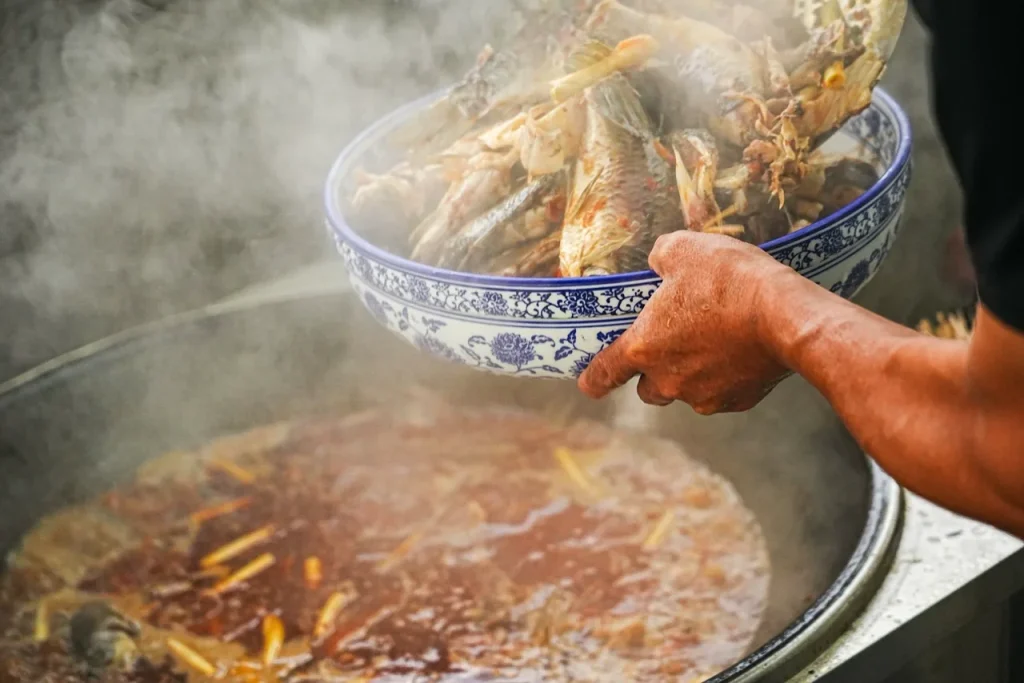
Chinese hot pot looks simple from the outside: a bubbling pot, plates of sliced meat and vegetables, dipping sauces, and people reaching in with chopsticks. But once you sit down, it becomes clear that hot pot is a social ritual as much as a meal. The table has a rhythm. People wait, offer, tease, serve, negotiate spice levels, and quietly watch whether everyone has enough to eat.
The basic idea is old and practical. A shared heat source turns raw ingredients into dinner in front of everyone. In modern cities, hot pot restaurants can be stylish, noisy, late-night, and highly branded. At home, the same meal may be relaxed and crowded, with a portable cooker in the middle of the table. In both settings, the pot creates togetherness.
The pot belongs to everyone
At a hot pot table, no single person owns the dish. The broth is shared, so the meal asks for awareness. You do not throw in everything at once if the pot is small. You do not fish endlessly while others wait. You watch cooking times, help newcomers, and avoid losing tiny pieces of food in the broth. Good hot pot manners are mostly good group manners.
This is why hot pot is popular for birthdays, reunions, after-work meals, and winter gatherings. It gives people something to do with their hands while they talk. The meal does not arrive finished from the kitchen. It is made collectively, piece by piece, conversation by conversation.
Ordering is part of the ritual
Before eating, the group has to choose broth. Spicy mala broth, tomato broth, mushroom broth, clear chicken soup, pickled cabbage broth, and divided pots all solve different social problems. A split pot is more than a menu option. It lets spice lovers and cautious eaters share one table without forcing the same experience on everyone.
Then come ingredients: beef, lamb, fish balls, tofu, mushrooms, leafy greens, lotus root, potatoes, noodles, and more. Ordering too much can feel generous but wasteful. Ordering too little interrupts the flow. Experienced hosts often balance rich items with vegetables and starches so the meal feels complete rather than heavy.
Sauces show personality
The sauce station is where hot pot becomes personal. One diner may mix sesame paste, garlic, cilantro, and chili oil. Another may prefer soy sauce, vinegar, scallions, and fresh chilies. Some people build a careful bowl; others improvise. The sauce says something about taste, region, and tolerance for heat.
This personal bowl balances the communal pot. Everyone shares the same broth, but each person finishes the flavor individually. That tension between shared food and personal preference appears across Chinese dining. A bowl of congee can be plain until toppings make it yours. Hot pot works the same way, only louder and more sociable.
The courtesy of serving others
One of the warmest hot pot habits is serving others. Someone may place cooked meat in a friend’s bowl, remind an elder that the mushrooms are ready, or help a child cool down a piece of tofu. These gestures should be gentle, not pushy. The point is care, not control.
In family settings, this style of eating can echo other food traditions. Birthday noodles carry a wish for longevity, as described in TodayChinese’s guide to Chinese noodles and longevity. Hot pot carries a different wish: stay, eat slowly, keep talking, and let the table remain warm.
What not to do
Hot pot etiquette has practical rules. Use serving chopsticks or ladles when available. Do not return half-eaten food to the pot. Do not splash broth. Do not monopolize the best items. Be careful with raw meat and cooked food. If someone cannot eat spicy food, do not pressure them to prove courage with chili.
These rules are not fussy. They keep the meal pleasant. A shared pot magnifies both kindness and carelessness. Good diners make the experience easier for everyone else.
Why the meal feels so Chinese
Hot pot feels Chinese not only because of ingredients, but because of the social shape of the meal. It is collective but flexible, generous but practical, lively but organized. Like morning baozi and mantou stalls, it turns ordinary food into a scene of daily culture.
By the end, the broth is darker, the plates are emptier, and the table is messy in a satisfying way. People have cooked for themselves and each other. That is the real flavor of hot pot: not just spice or broth, but the feeling that everyone has shared the same warmth.