A bowl of congee does not announce itself loudly. It has no dramatic shape, no bright sauce, and no need for expensive ingredients. At its most basic, it is rice cooked with a generous amount of water until the grains soften, split, and become a warm porridge. Yet in Chinese food culture, this quiet bowl says a great deal. It speaks about comfort, economy, regional identity, family care, and the Chinese belief that food should fit the body’s condition as well as the season.
In many homes, congee appears in the morning. It may be served plain with pickled vegetables, salted duck egg, peanuts, fermented tofu, or yesterday’s stir-fried greens. In other homes, it arrives at night when someone wants a lighter meal. When a child has a fever, when an elder has little appetite, or when a busy adult comes home tired, congee is often the first suggestion. It is not fancy, but it is trusted.
Simple food with many personalities
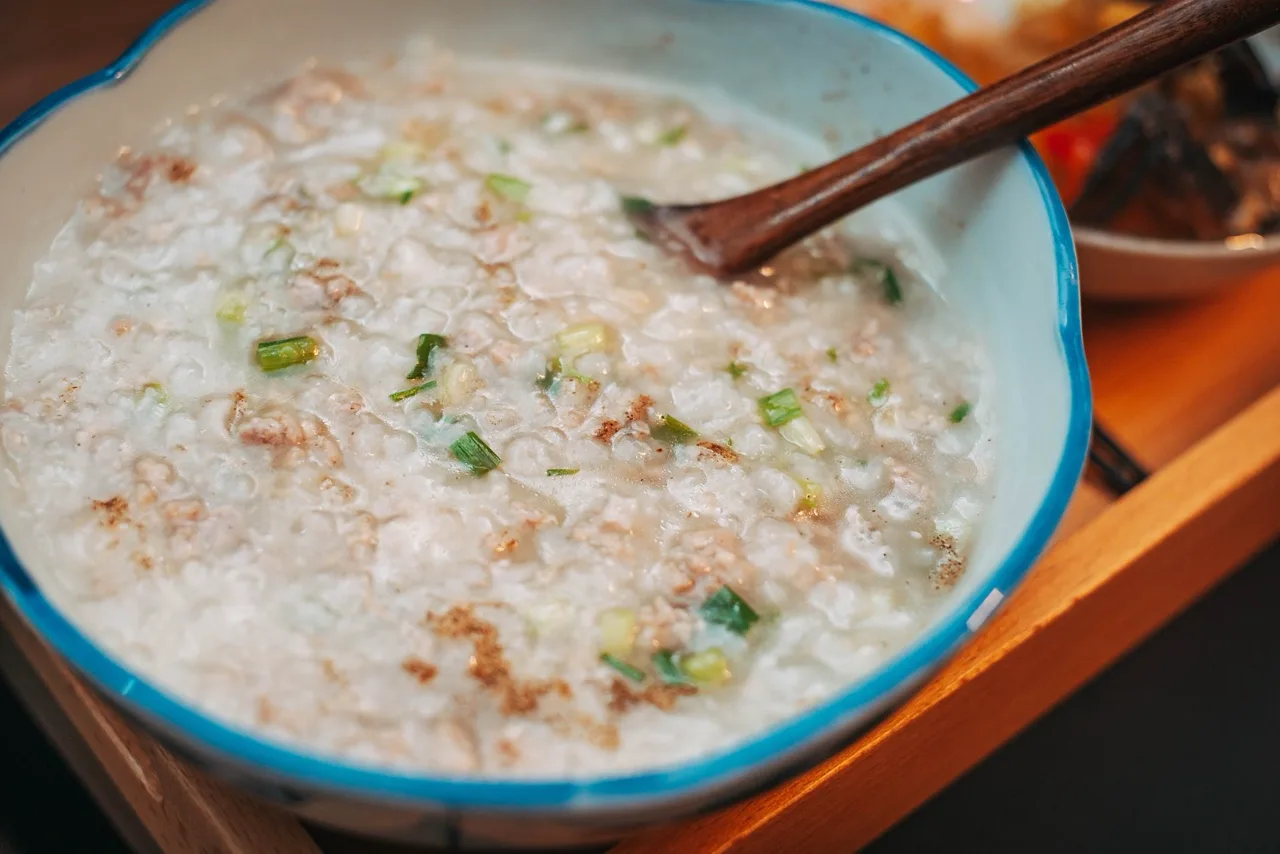
One reason congee matters is that it changes from region to region without losing its basic identity. In parts of northern China, a breakfast table might include millet porridge, steamed buns, and small dishes of pickles. The texture may be thinner, the flavor mild, and the meal practical. In Guangdong, congee can become silky and deeply flavored, cooked with fish slices, lean pork, century egg, fresh ginger, or offal. It may be eaten in a busy shop where the cook controls the heat so carefully that the rice seems to melt.
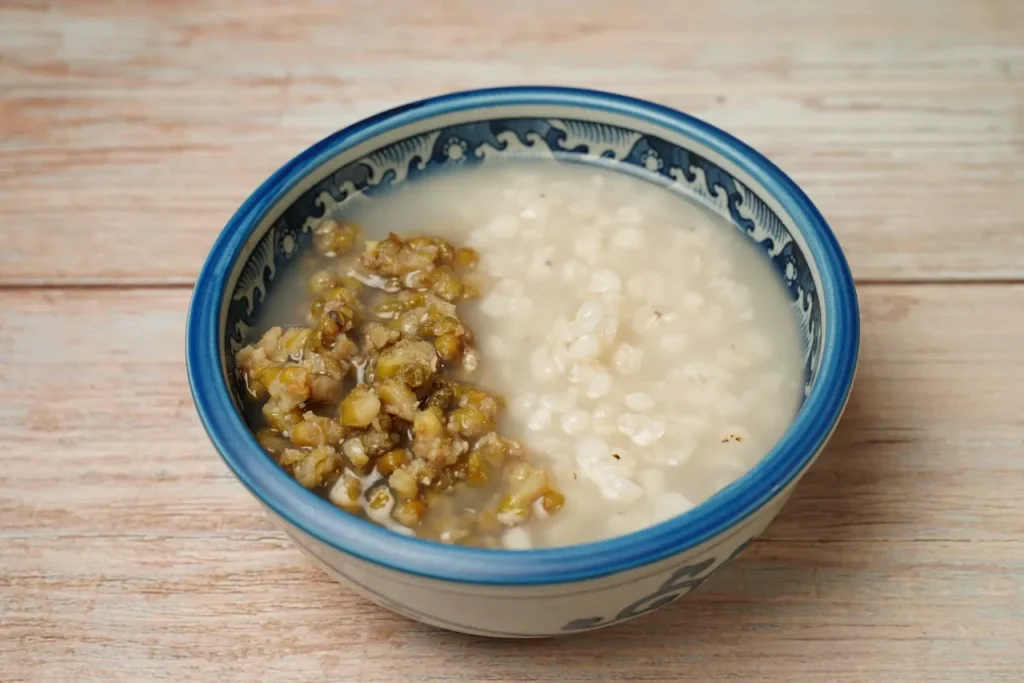
In coastal areas, seafood congee can carry the sweetness of shrimp, crab, or white fish. In other places, mung beans, red beans, lotus seeds, pumpkin, sweet potato, or corn may be added. Some versions are savory, others gently sweet. The bowl adapts to local crops, climate, and taste. This flexibility is part of its charm. Congee is not one recipe; it is a method of making rice generous.
The art of not wasting
Congee also reflects an old kitchen wisdom: nothing useful should be wasted. A small amount of rice can feed several people when cooked into porridge. Leftover rice can be turned into a new breakfast. Bones from a chicken or fish can flavor the cooking liquid. A few slices of ginger, a handful of greens, or a spoonful of preserved vegetables can make the bowl feel complete.
This does not mean congee is poor food. It means Chinese home cooking often values transformation over display. A good cook is not only someone who can prepare a banquet dish. A good cook also knows how to make a plain bowl satisfying, how to adjust texture, and how to pair simple sides so the meal feels balanced. In this sense, congee belongs to the same world as steamed rice, noodles in broth, and clear soups: everyday foods that reveal skill quietly.
Texture is the real test
People who grew up eating congee often care deeply about texture. Some like it thin enough to drink from the bowl. Others prefer it thick, with the rice broken down until it looks almost creamy. Cantonese-style congee is famous for its smooth body, often achieved by patient cooking and steady stirring. Homemade congee may be more rustic, with visible grains and a lighter mouthfeel.
The choice depends on mood. A thin porridge can feel refreshing in summer or helpful when the stomach is unsettled. A thicker one feels warming and substantial. This attention to texture is one of the details that outsiders may miss. Congee is not simply “rice soup.” The amount of water, the type of rice, the heat, the pot, and the cooking time all change the final bowl.
Food as care
Perhaps the strongest meaning of congee is care. In many Chinese families, offering congee is a way of saying, “Eat something gentle.” It is common after illness, after dental work, during pregnancy or postpartum recovery in some traditions, and for elders who prefer soft food. The bowl carries a practical tenderness. It does not ask the eater to work hard.
This idea is connected to broader Chinese food thinking, where meals are often adjusted according to weather, age, energy, and bodily comfort. Whether or not every family explains this in formal terms, the habit remains. On a humid morning, a lighter bowl may feel right. In winter, a thicker porridge with pumpkin or beans may feel more comforting. Food is not separate from daily well-being.
The breakfast table around the bowl
Congee rarely stands alone. The side dishes around it create the rhythm of the meal. Pickled mustard greens add salt and crunch. Roasted peanuts bring fragrance. A salted duck egg gives richness, especially when the orange yolk is mashed into the rice. Fried dough sticks may be dipped into the bowl. In some homes, a few leftovers from dinner are placed on small plates, turning breakfast into a gentle continuation of yesterday.
This way of eating encourages small contrasts. Hot and cool, soft and crisp, plain and salty, mild and sharp. A Western breakfast often centers on one main plate. A Chinese congee breakfast may center on the bowl, but the pleasure comes from the surrounding dishes and the freedom to combine them bite by bite.
Why travelers should try it slowly
For travelers in China, congee is easy to overlook because it does not seem exciting on a menu. That is a mistake. A local congee shop can teach you about regional taste as clearly as a famous restaurant. Notice whether the porridge is thick or thin, what toppings are popular, what people order beside it, and whether the meal feels quick, social, or soothing.
At home, congee is also one of the easiest Chinese dishes to begin with. Rinse rice, add plenty of water, simmer patiently, and adjust as it cooks. From there, the bowl can become whatever the morning needs. That is the deeper lesson. Chinese food culture is not only about rare ingredients or festival banquets. It is also about humble dishes that know how to comfort a household, stretch a pantry, and make ordinary rice feel alive.