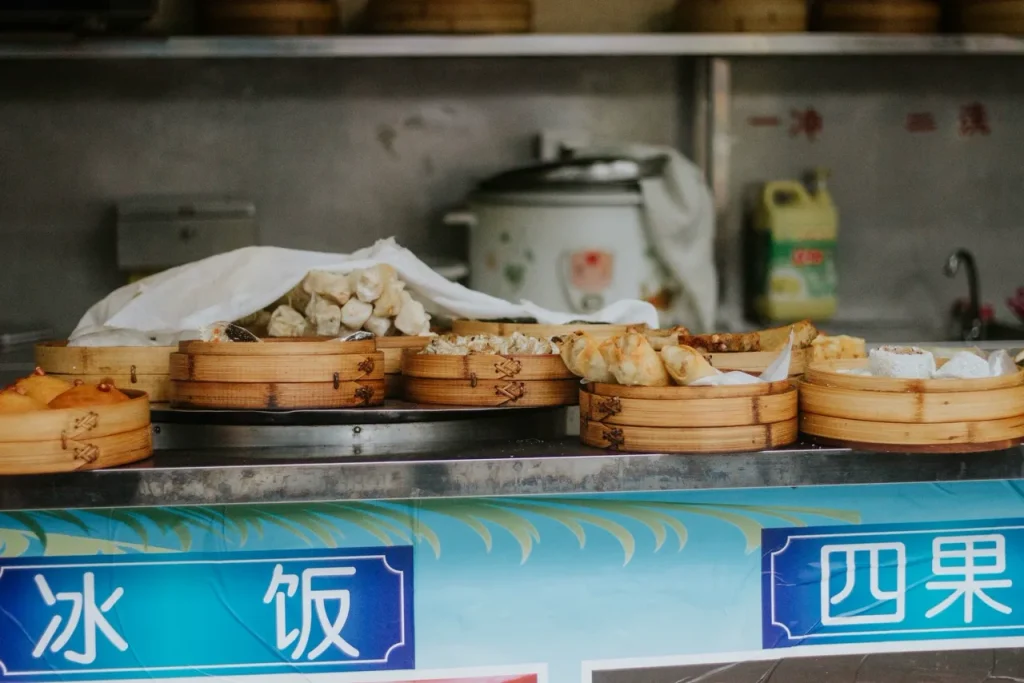
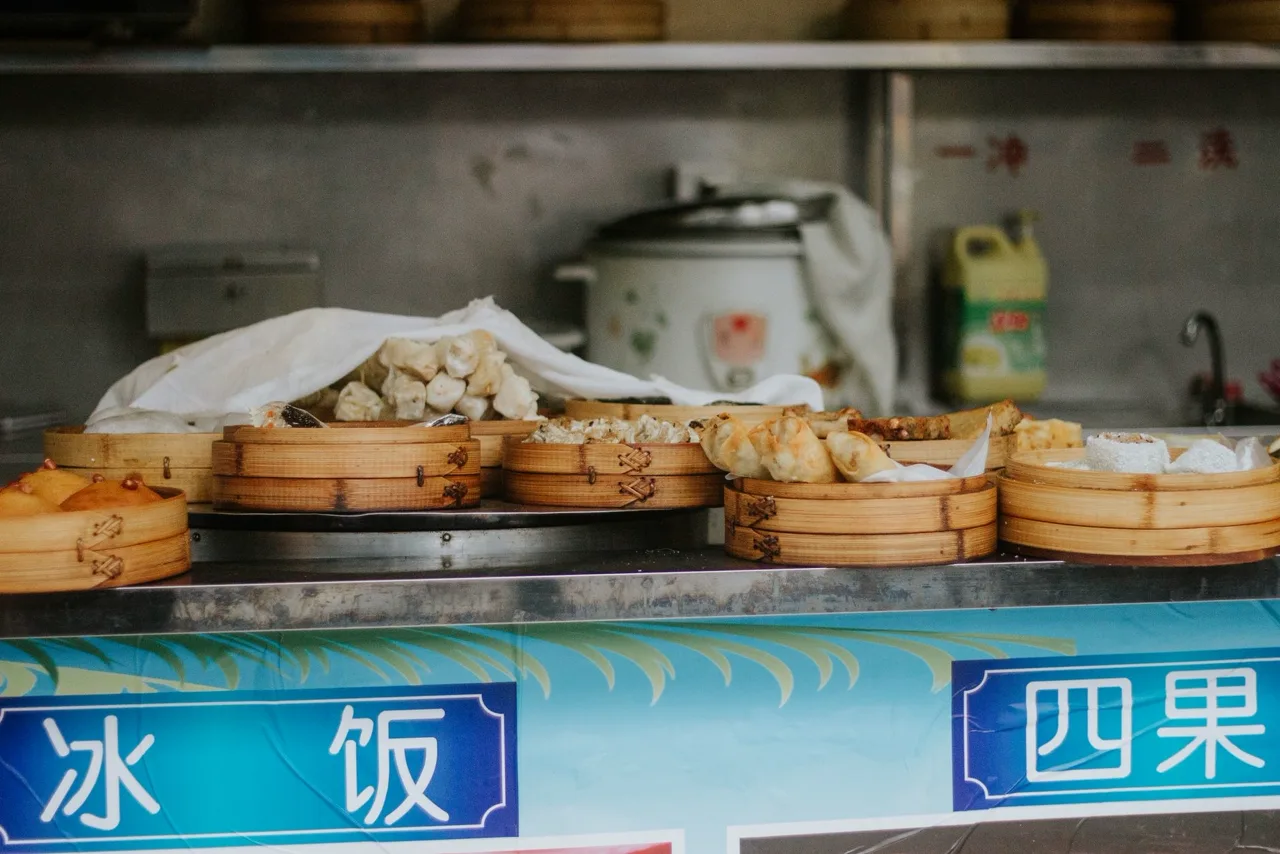
In many Chinese cities, breakfast begins with steam. Before office towers fully wake up and before school gates become crowded, small shops and street stalls lift bamboo or metal steamer lids and release the smell of warm dough. Inside are baozi with savory fillings, plain mantou, flower rolls, vegetable buns, red bean buns, and sometimes regional specialties that regular customers can name without looking at the menu.
Chinese steamed buns are humble food, but they are one of the clearest windows into everyday eating. They are quick, filling, inexpensive, and adaptable. A student can carry one in a plastic bag. A commuter can eat one beside a cup of soy milk. A family can keep a bag of frozen buns at home for busy mornings. Like congee, steamed buns belong to the practical side of Chinese food culture: food that comforts without asking for attention.
Baozi and mantou
The two most familiar names are baozi and mantou. Baozi are filled buns. The filling may be pork with scallion, beef, lamb, cabbage, chives and egg, mushrooms, tofu, red bean paste, custard, or many other combinations. Mantou are usually unfilled steamed breads, soft and slightly sweet from the wheat dough itself. In northern China, mantou can be as essential as rice is in the south, served with soups, stir-fries, pickles, or stews.
The difference sounds simple, but it opens a whole world. A good baozi depends on balance: the dough should be soft but not soggy, the filling juicy but not greasy, the pleats neat enough to hold everything together. A good mantou depends on texture and wheat fragrance. It can be torn by hand, dipped into sauce, eaten with eggs, or used to soak up the last of a dish.
The breakfast stall rhythm
A steamed bun stall has its own choreography. The vendor stacks steamers, counts change, packs buns quickly, and remembers who wants spicy sauce or soy milk. Customers know the morning rush. They point, order, pay, and move aside. Some shops sell out of the most popular fillings before mid-morning. Others keep steaming through lunch for workers who need something simple.
This rhythm is part of modern urban life. A city may have high-speed trains, delivery apps, luxury malls, and glass offices, but the morning bun shop remains stubbornly local. It smells like yeast, hot metal, scallion, and broth. During a slow city walk, stopping at a neighborhood bun shop can reveal more about daily life than a famous landmark does.
Regional taste in a small package
Steamed buns vary widely by region. Tianjin is famous for juicy goubuli-style buns, though locals may debate where the best ones are actually found. Shanghai has shengjian bao, pan-fried rather than purely steamed, with a crisp bottom and hot soup inside. In the north, large wheat buns and mantou feel hearty and direct. In the south, smaller buns may appear beside rice porridge, noodles, or tea.
Fillings also show local habits. Some areas prefer lamb or beef. Others lean toward pork, greens, mushrooms, seafood, or sweet pastes. Seasonal vegetables can change the flavor of a home batch. A bun is portable, but it still carries place.
Home kitchens and family memory
Making buns at home takes time. Dough must rise, fillings must be chopped and seasoned, wrappers must be shaped, and steamers must be watched. In many families, bun-making becomes a group activity before holidays or when relatives gather. One person rolls dough, another fills, another pleats, and someone comments that the younger generation’s pleats are not tight enough.
Homemade buns are not always perfect, which is part of their charm. Some are too large, some leak, and some carry a recognizable family taste that no shop can copy. During Chinese New Year preparations in some regions, steamed breads and buns may be made in quantity so the household has easy food for visiting days.
Why travelers should try them early
For travelers, steamed buns are best eaten in the morning when shops are busy and the steamers are fresh. Choose a place with steady local traffic. Try one savory bun and one plain or sweet bun. Notice whether the wrapper is fluffy, whether the filling has broth, and what people drink with it. Soy milk, millet porridge, tea, or a simple soup can change the whole breakfast.
Be careful with very juicy buns: the filling may be hot. Locals often bite a small opening first, let steam escape, and then eat slowly. This practical knowledge is part of the experience.
Everyday food with staying power
Steamed buns endure because they solve a daily problem beautifully. They are warm, portable, affordable, and endlessly variable. They can be made by a grandmother, a factory, a neighborhood shop, or a skilled restaurant kitchen. They suit hurried mornings and slow family meals. They can feel plain or deeply satisfying depending on the moment.
Chinese food culture is often introduced through famous banquet dishes, regional cuisines, or festival foods. Those are important, but the morning bun deserves equal attention. It shows how ordinary food holds a city together before the day begins: one steamer, one queue, one soft bun in the hand.