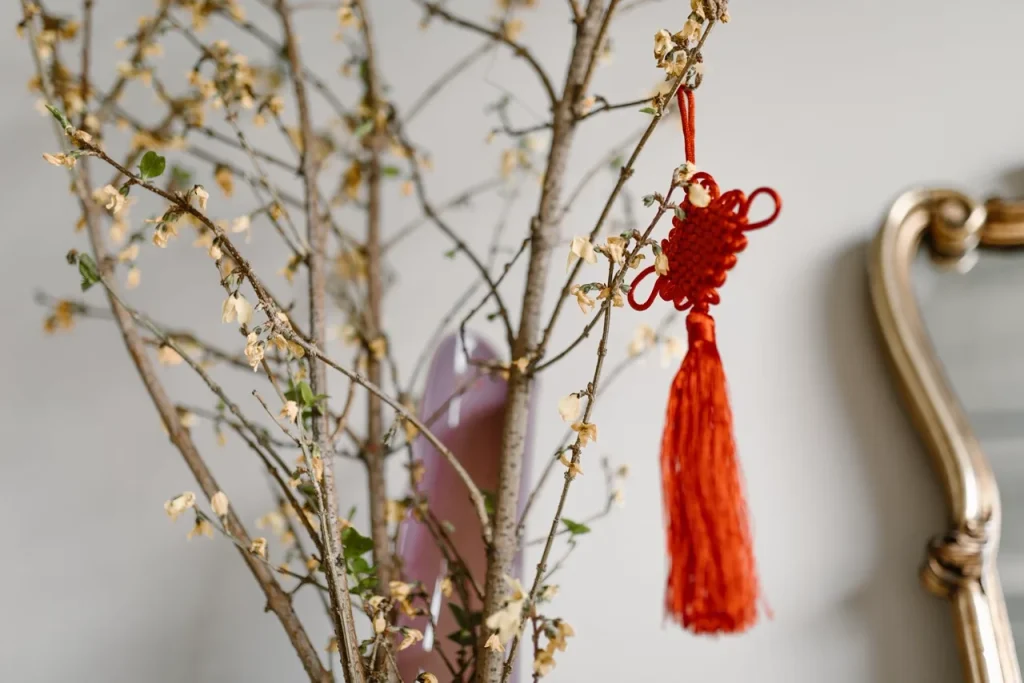
Walk into a Chinese home during Spring Festival or a wedding season, and you may notice small decorative knots hanging on walls, doors, car mirrors, or gift boxes. They are made from a single cord, woven into symmetrical patterns, and usually finished with a tassel. There is no glue, no knotting tool, no hidden cut. Just one thread, folded and pulled into shape by hand. This is the Chinese knot, and it carries meaning far beyond decoration.
Chinese knots, or zhongguo jie, are part of a long folk tradition that transforms simple cord into a language of luck, connection, and beauty. Each shape, color, and pattern can suggest something specific: prosperity, longevity, romantic union, or protection. The knots appear in daily life, but they also carry generations of symbolic practice.
One cord, many shapes
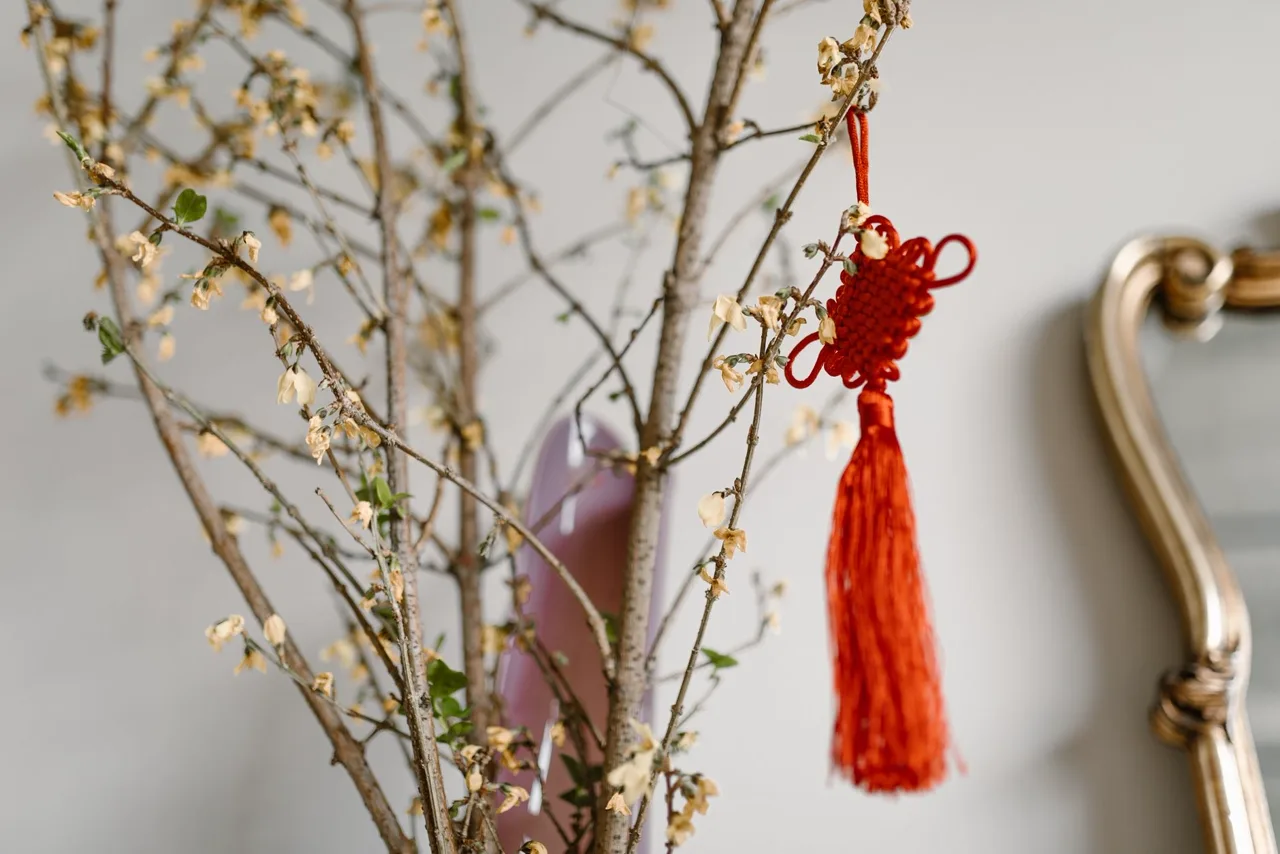
The defining feature of a Chinese knot is that it is made from a single length of cord. The cord is folded, looped, tightened, and arranged into a balanced design. The symmetry is important. A well-made knot looks the same from every angle. The tassel at the bottom adds movement and elegance.
There are many basic knot types. The panchang knot, also called the good luck knot, creates a cross-shaped structure. The double coin knot resembles two interlocking coins. The button knot forms a small round ball. The cloverleaf knot carries the shape of a four-leaf clover. Each type has preferred uses and meanings.
Chinese culture uses visual symbols to express wishes that may be hard to say directly. Paper cutting turns red paper into windows of blessing. Chinese knots do the same with cord. Both crafts make intangible hope into something you can hold.
Red as the base color
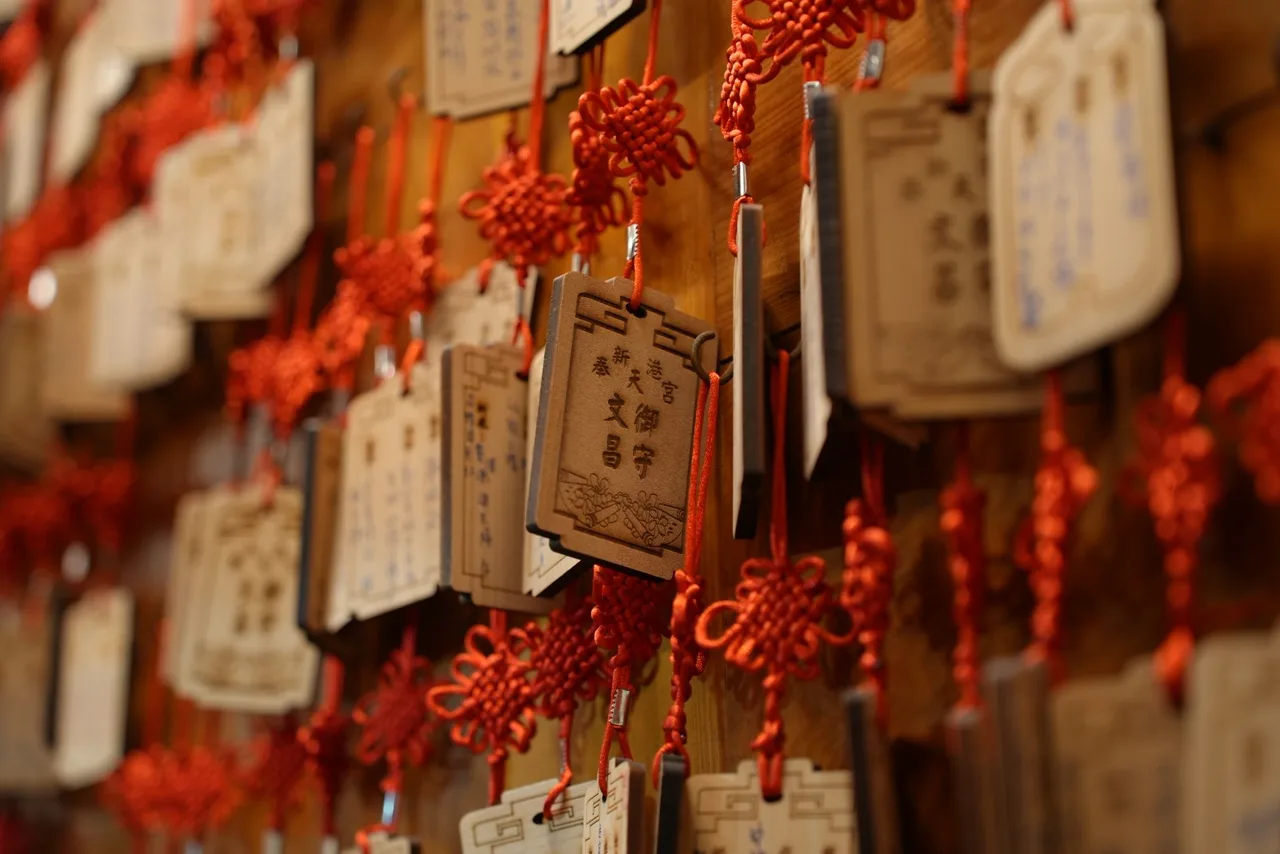
Most Chinese knots are red, for the same reason that red envelopes, wedding decorations, and festival lanterns are red. Red symbolizes good fortune, joy, and energy. A red knot on a door frame or gift box is a visual wish for happiness.
Gold, green, blue, and pink knots also appear, especially in modern designs, but red remains dominant. The association is so strong that even non-Chinese buyers often recognize red knots as a cultural marker.
This practice of wrapping blessing in red objects is everywhere in Chinese life. Red envelopes carry money and good wishes during festivals. Chinese knots carry the same color logic in a different form.
Knots in festivals and weddings
During Spring Festival, families may hang a large red knot in the living room. Some are simple; others are elaborate wall pieces with multiple layers and tassels. During weddings, knots decorated with the Double Happiness symbol or paired fish can appear on walls, decorations, or invitations. The cord becomes a visual expression of connection.
Knots also appear as car accessories, phone charms, gift bag ties, and keychain decorations. They are small enough to be personal, but meaningful enough to be gifts. Many travelers buy Chinese knots as souvenirs because the objects are compact, beautiful, and rich in cultural association.
Not only decoration: a craft that teaches patience
Making a Chinese knot by hand requires patience and precision. A beginner may struggle to tighten loops evenly or maintain symmetry. The process teaches that small details matter. Experienced makers can create knots with complex internal patterns, multiple layers, and additional bead or jade accents.
This craft aspect connects Chinese knots to other traditional skills that reward careful practice. Like writing the character Fu with brush and ink, knot-making demands control over hands, eyes, and materials. The result is satisfying because the process asks for discipline.
Modern life and the survival of an old craft
In a world of mass-produced decorations, handmade knots face pressure. Machine-made knots are cheaper and faster. But many people still seek handcrafted knots for special occasions, and knot-making classes attract young people curious about traditional crafts.
Cultural tourism also helps. Workshops in Chinese cities teach knot-making to visitors. Online tutorials show the steps. The craft adapts without losing its core principle: one cord, human fingers, and a design that means something.
Why a simple knot matters
A Chinese knot is a small thing. You can hold it in one hand. But it carries a large idea: that connection can be beautiful, that luck can be woven, and that a single thread, when handled with care, can say more than a long speech. When a person receives a red knot, they are receiving not only an object, but a wish made visible.