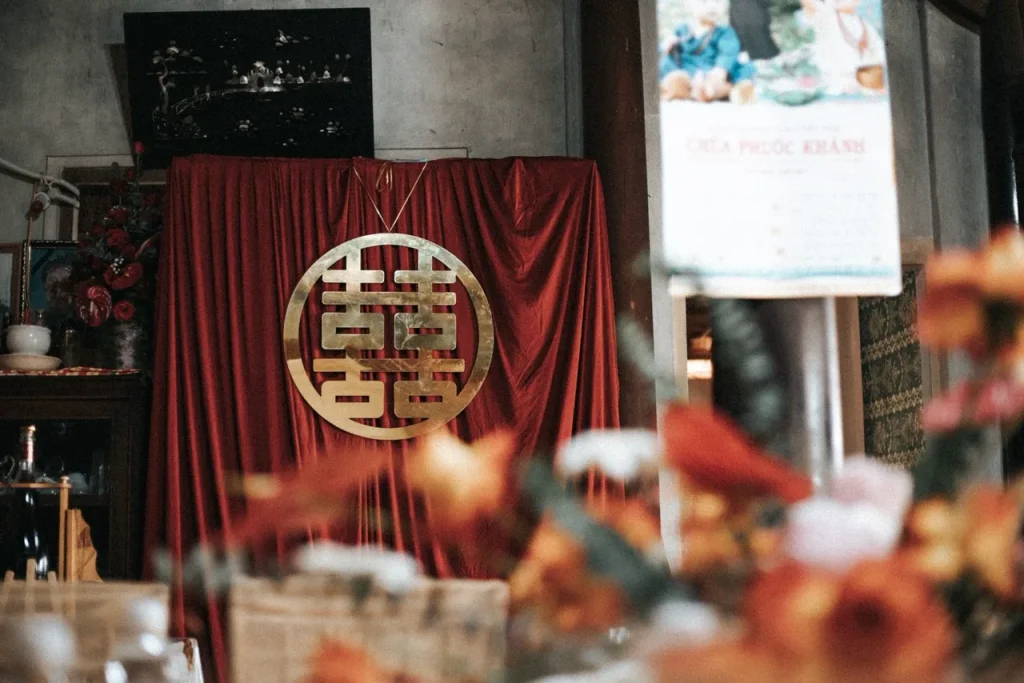
The Double Happiness symbol, written 囍, is one of the most recognizable signs at Chinese weddings. It appears on red paper cuttings, bedroom doors, invitation cards, teacups, gift boxes, banquet backdrops, and even small candies placed on restaurant tables. At first glance it looks like a decorative pattern. In fact, it is a clever doubling of the character 喜, meaning happiness or joy.
That doubling is the whole point. A wedding is not imagined as one person’s happiness alone. It is paired joy: two people, two families, and a shared future. The symbol turns language into design and design into blessing.
From character to wedding sign
The ordinary character 喜 is used in words connected with liking, celebration, and happy events. By placing two 喜 characters side by side and merging them into one balanced form, Chinese tradition creates 囍, often read as shuangxi, or double happiness. It is not a standard everyday character in the same way as 喜, but it is instantly understood in a wedding context.
Like the Fu character during Chinese New Year, Double Happiness shows how Chinese writing can become a seasonal or ceremonial image. People may not stop to analyze every stroke. They feel its meaning because they have seen it at moments of celebration.
Why it is usually red
Double Happiness is most often red, sometimes with gold details. Red is the color of joy, luck, vitality, and celebration in Chinese culture. At a wedding, it helps create warmth and public festivity. A red 囍 pasted on a door announces that a happy event is happening here. It also turns ordinary space into ceremonial space.
In the past, wedding rooms might be decorated with red bedding, red candles, red paper cuttings, and red envelopes. Today, wedding styles vary widely. Some couples choose white dresses, hotel banquets, outdoor ceremonies, or modern minimalist invitations. Yet many still include Double Happiness somewhere. It may be small, stylized, or playful, but it remains a bridge to family expectation.
A sign for two families
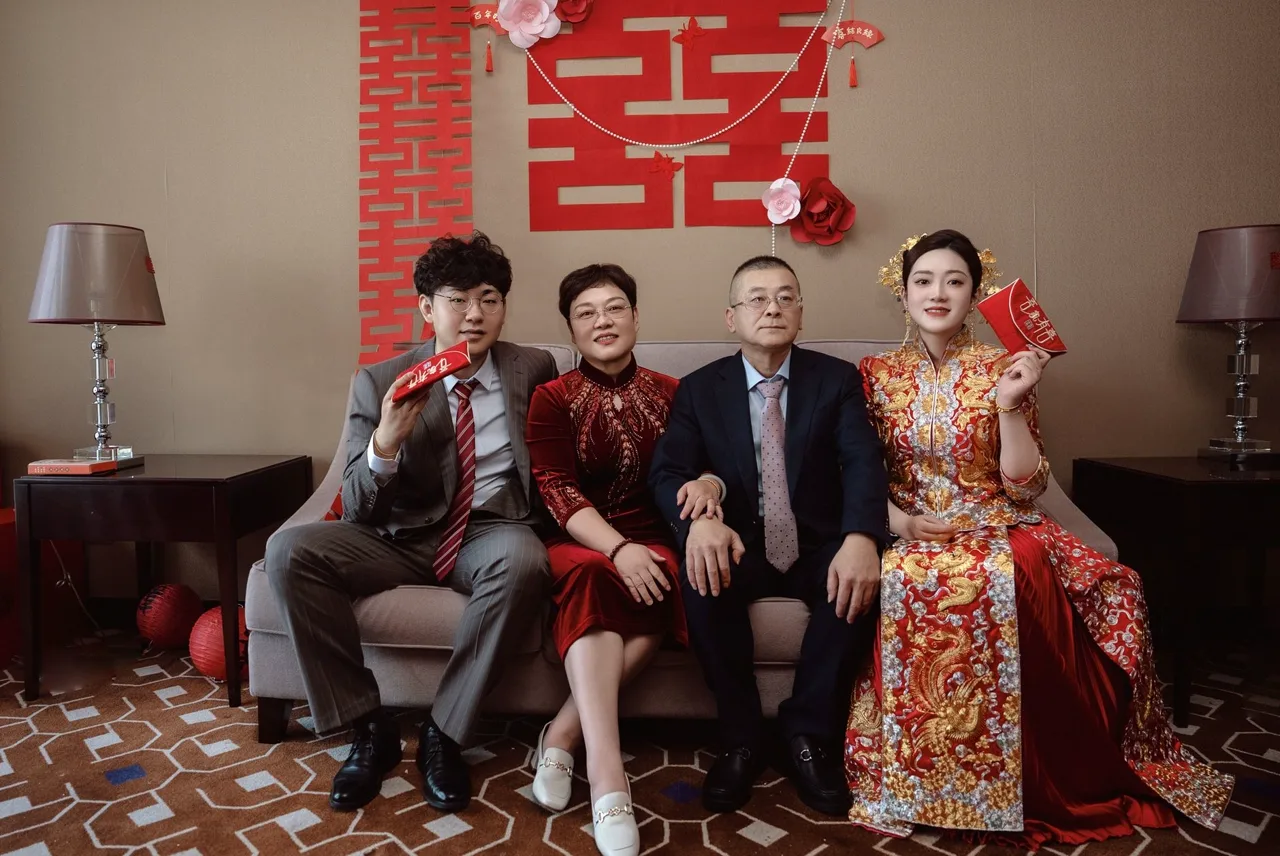
Chinese weddings are personal, but they are also family events. The couple matters most, yet parents, relatives, ancestors, and guests all have a place in the ritual imagination. Double Happiness fits this social structure because it is symmetrical. It looks balanced, joined, and complete. Readers comparing love-related customs can also look at the Qixi Festival, while the broader New Year setting is introduced in TodayChinese’s guide to Chinese New Year traditions.
The symbol can appear during the tea ceremony, when the couple serves tea to elders as a gesture of respect. It may be printed on gift packages or displayed behind the banquet stage. Guests see it while offering blessings, eating, taking photos, and greeting relatives. The sign silently repeats the message of the day: may joy come in pairs and may the families be joined peacefully.
Design variations
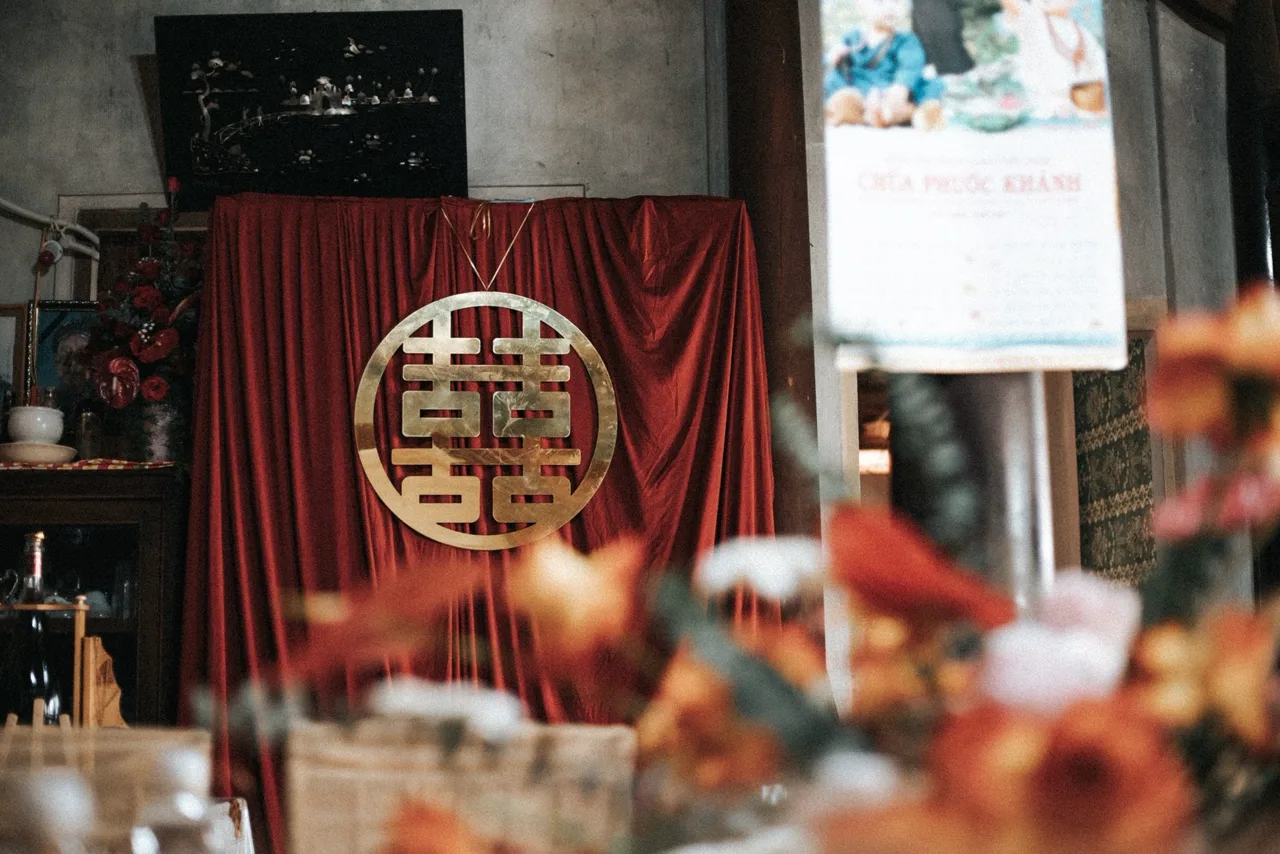
Double Happiness is a favorite subject for paper cutting. Artists can shape the strokes into birds, flowers, hearts, dragons, phoenixes, or round medallions. Some versions are bold and square. Others are delicate and lace-like. Modern designers use it in logos, jewelry, cake toppers, neon signs, and digital invitations.
This flexibility keeps the symbol alive. A young couple may not want a fully traditional wedding, but they may still like a clean gold 囍 on a red card. Another couple may choose a humorous version for a photo booth. Tradition does not always survive by staying unchanged. Sometimes it survives by being redesigned.
Language learners and visual meaning
For Chinese language learners, Double Happiness is a useful lesson. It shows that Chinese characters are not only units of reading. They can be social objects. A character can be pasted, gifted, photographed, stylized, and displayed. Its meaning depends on where and when it appears.
It also shows how repetition works symbolically. Doubling a character can intensify meaning, but here it does something more specific. It turns happiness into partnership. The design itself teaches the cultural value: joy is better when shared.
How to use it respectfully
If you use Double Happiness for a wedding card, decoration, or gift, keep the context in mind. It is strongly associated with marriage and should not be used randomly as a general Chinese-style ornament. Place it where blessing is appropriate: an invitation, a wedding room, a gift envelope, or a banquet display. Red and gold are safe traditional colors, though modern designs can vary.
Also remember that customs differ. Some families prefer more traditional placement and timing. Others are relaxed. When in doubt, ask the couple or their family. Respect is part of the symbol’s meaning.
Why the symbol endures
Double Happiness endures because it is simple, beautiful, and emotionally clear. It does not require a long explanation to work. Two joys become one sign. Two people begin one household. Two families meet in one celebration. The symbol is both decorative and practical, ancient in feeling and endlessly adaptable.
In a modern Chinese wedding, many details may come from global wedding culture: gowns, photography styles, floral arches, hotel banquets, playlists, and videos. But when 囍 appears, it changes the atmosphere. It says that this happiness has a Chinese language, a family memory, and a wish for paired joy that will last beyond the wedding day.