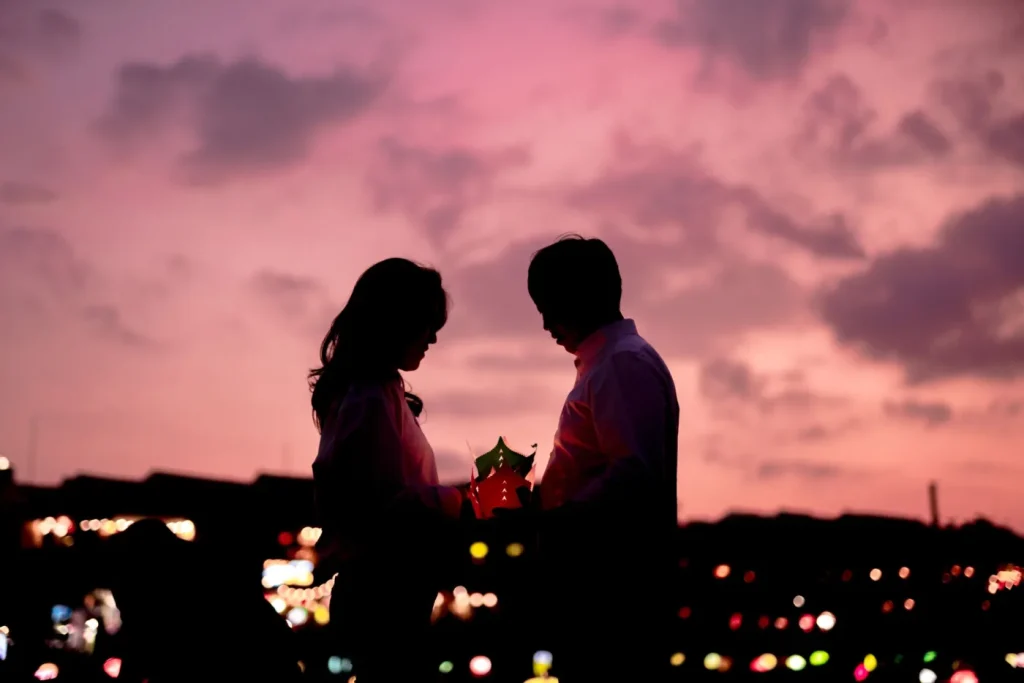
Qixi Festival: The Chinese Double Seventh Festival and the Love Story of the Cowherd and Weaver Girl
What Is Qixi Festival?
Qixi Festival, also called the Double Seventh Festival, falls on the seventh day of the seventh lunar month. In modern English it is often described as Chinese Valentine’s Day, because it is connected with one of China’s most famous romantic legends: the Cowherd and the Weaver Girl. Yet Qixi is older and richer than a simple lovers’ holiday. Traditionally, it was also a festival for girls and women, especially related to weaving, needlework, cleverness, and wishes for skillful hands and a good marriage.
The name Qixi means “Seventh Evening.” It usually falls in August in the Gregorian calendar. In the night sky, the festival is associated with the stars Altair and Vega, separated by the Milky Way. Chinese tradition imagines them as two lovers who can meet only once a year, when magpies form a bridge across the heavenly river.
For international readers, Qixi is fascinating because it shows how astronomy, domestic skills, gender expectations, romance, and seasonal customs came together in one festival. Modern marketing emphasizes couples and gifts, but the older festival belonged strongly to young women’s hopes, talents, and social life.
The Legend of the Cowherd and the Weaver Girl
The best-known Qixi story tells of Niulang, a poor but kind cowherd, and Zhinü, a heavenly weaver girl. Zhinü was the daughter or granddaughter of a celestial ruler, depending on the version. She wove beautiful clouds and heavenly fabrics. One day she came down to earth, met Niulang, and fell in love with him. They married and had children.
Their happiness did not last. The heavenly world discovered that Zhinü had married a mortal and neglected her celestial duties. She was taken back to heaven. Niulang tried to follow her, often with the help of his loyal ox, but the Queen Mother of the West drew a wide river across the sky with her hairpin. This river became the Milky Way, separating the lovers.
Moved by their sorrow, magpies gathered once a year to form a bridge, allowing Niulang and Zhinü to meet on the seventh night of the seventh lunar month. In the sky, Niulang is linked with Altair, Zhinü with Vega, and the Milky Way with the river between them.
The story is romantic, but also bittersweet. It values love, loyalty, and perseverance, while recognizing separation and duty. This emotional tone makes Qixi different from cheerful commercial Valentine’s Day imagery. It is a night of longing as much as celebration.
Traditional Origins and Women’s Customs
Before Qixi became widely known as a romantic holiday, it was often called Qiqiao Jie, the Festival for Pleading for Skills. The word qiqiao means asking for cleverness or skill. In traditional society, weaving, sewing, embroidery, and domestic artistry were important abilities for women. On Qixi night, girls prayed to Zhinü, the divine weaver, for skillful hands, intelligence, beauty, and a good future marriage.
Customs varied across regions. Girls might thread needles by moonlight or lamplight to test their dexterity. They might display fruits, flowers, tea, and incense as offerings. In some places, they placed needles on water and judged the shadows as signs of cleverness. Others made small handicrafts, carved melons, embroidered, or competed in needlework.
These customs were not only about marriage. They gave young women a rare public and social festival of their own. Girls gathered, talked, compared skills, and expressed hopes in symbolic ways. Qixi therefore preserves an important part of women’s cultural life in premodern China.
How Ordinary People Celebrated
In old households, Qixi was often quiet and domestic rather than loud and public. Women prepared offerings in courtyards, especially under the night sky. They prayed to Zhinü and watched the stars. Children listened to the Cowherd and Weaver Girl story from elders. Some people believed that if you sat quietly under grapevines, you could hear the lovers whispering when they met across the magpie bridge.
Foods could include seasonal fruits, melons, pastries, and special small cakes. In some regions, people made qiaoguo, fried or baked pastries associated with the festival. Their shapes and recipes varied, but they were often small, decorative, and shared among family members or girls’ groups.
The festival also had local rituals for children, fertility, and household blessings. Because it occurred in late summer, it fit naturally with seasonal produce and evening gatherings outdoors.
Qixi in History
Qixi has a long history in Chinese literature. References to the Weaver Girl and Cowherd appear in ancient texts and poetry. Over time, the legend became one of the most beloved love stories in East Asia, influencing Chinese, Japanese, Korean, and Vietnamese traditions. In Japan, the related Tanabata festival developed its own customs.
During imperial times, Qixi was celebrated by palace women and common families alike. Court versions might involve elegant displays, poems, music, and refined needlework. Among everyday families, the festival remained practical and heartfelt. It reflected the values placed on female skill, moral conduct, and family life.
Poets often used Qixi imagery to express longing, separation, and reunion. The magpie bridge became a powerful symbol: love can cross impossible distance, but only briefly. This made Qixi useful not only for romantic love but also for writing about homesickness, exile, and emotional distance.
Food and Customs
Qixi customs differ by region, but several themes are common.
**Needle-threading competitions** tested young women’s skill and patience. Threading a needle in dim light symbolized cleverness.
**Offerings to Zhinü** could include fruit, flowers, incense, tea, and handmade items.
**Qiaoguo pastries** were festival foods in some areas. They were often made with flour, oil, sugar, or honey, and shaped into small forms.
**Star watching** connected the human festival to the sky. Families looked for Vega, Altair, and the Milky Way.
**Melon carving and handicrafts** showed creativity and delicate workmanship.
**Listening under vines** was a charming folk belief connected to the lovers’ annual meeting.
These customs show that Qixi was not originally centered on buying gifts. It was about skill, imagination, prayer, and storytelling.
Modern Qixi: Chinese Valentine’s Day
Today, Qixi is widely marketed as Chinese Valentine’s Day. Couples may go out for dinner, exchange flowers, buy jewelry, post romantic messages online, or take wedding photos. Shopping platforms and restaurants promote Qixi campaigns much like Valentine’s Day. Young people often know the Cowherd and Weaver Girl story, but they may not practice needlework customs.
This modern transformation is partly natural. The legend is romantic, and urban consumer culture has created new ways to celebrate love. However, some cultural commentators point out that the older Qixi was not only about couples. It was also about women’s skill, personal wishes, and the beauty of traditional handicrafts.
In recent years, there has been renewed interest in reviving traditional Qixi customs. Museums, schools, and cultural events may teach embroidery, hanfu dressing, qiaoguo making, or star-related storytelling. This gives the festival a richer identity than commercial romance alone.
Historical and Modern Differences
The biggest difference is the festival’s audience. Historically, Qixi was especially meaningful for girls and women. It gave them a night to pray for cleverness and express hopes within the expectations of traditional society. Modern Qixi is mainly for romantic couples, especially in cities.
The second difference is material culture. Older Qixi centered on handmade objects, offerings, and observation of the stars. Modern Qixi often centers on restaurants, online shopping, and social media. The stars remain in the story, but city lights make them harder to see.
Still, the emotional core continues: longing, reunion, devotion, and hope. Whether through a needle, a pastry, a poem, or a bouquet, Qixi remains a festival about the human desire to connect.
Tips for Foreign Readers
Calling Qixi “Chinese Valentine’s Day” is convenient, but it can be misleading if used alone. Valentine’s Day is about romantic love in a broad modern sense, while Qixi comes from a specific lunar date, a star legend, and women’s skill customs. A better description might be: China’s traditional Double Seventh Festival, now often celebrated as a romantic holiday.
If you want to appreciate Qixi more deeply, look at the night sky, learn the Cowherd and Weaver Girl story, and notice the older symbols of weaving and cleverness. The festival’s beauty lies not only in lovers meeting, but in the idea that love, work, patience, and longing are all woven together like Zhinü’s celestial cloth.