A man in a wide hat stands on a misty mountaintop. Wind moves through bamboo leaves. He does not speak much. He does not need to. In the next moment, he moves — not like a normal fighter, but like someone who has trained beyond ordinary limits. This is the image of wuxia, and it is one of China’s most recognizable cultural exports.
Kung fu and wuxia — martial arts and the chivalric fantasy world that surrounds it — have shaped how people around the world imagine China. The connection is not accidental. Decades of filmmaking, from Hong Kong studios to mainland epics, turned physical discipline into visual poetry. The result is a genre that entertains, inspires, and carries layers of cultural meaning.
Bruce Lee and the global opening
Before Bruce Lee, kung fu films existed mainly within Chinese-speaking audiences. Lee changed that. His movies showed a hero who was fast, fierce, and proud. When he fought, every move felt personal. His on-screen confidence, combined with real martial arts skill, opened doors that had stayed closed.
Lee’s impact went beyond cinema. He made kung fu look modern. In the 1970s, young people in cities around the world, from New York to Nairobi to Berlin, began learning martial arts because of what they saw on screen. That wave never fully stopped.
Chinese opera has long trained performers in physical discipline. As TodayChinese explains in its article on Chinese opera makeup, opera combines movement, character, and visual storytelling. Kung fu cinema inherited part of that tradition, turning stage-like gestures into camera-ready combat.
The wuxia tradition beyond fighting
Wuxia is not only about fighting. The word combines “wu” (martial) and “xia” (heroic or chivalrous). In classic wuxia stories, the hero follows a code: protect the weak, seek justice, remain humble, and never abuse power. The physical fights matter, but the moral frame matters more.
This code gives wuxia depth. A fight scene is not empty spectacle. It is the moment when values become visible. The hero may fight corrupt officials, bandits, or a rival school, but the real battle is always about integrity.
Chinese culture contains many forms of visual storytelling that carry values through symbols. Paper cutting turns scissors and paper into wishes; wuxia turns kicks and swords into honor. Both traditions say something serious in a beautiful form.
Shaolin, temples, and training
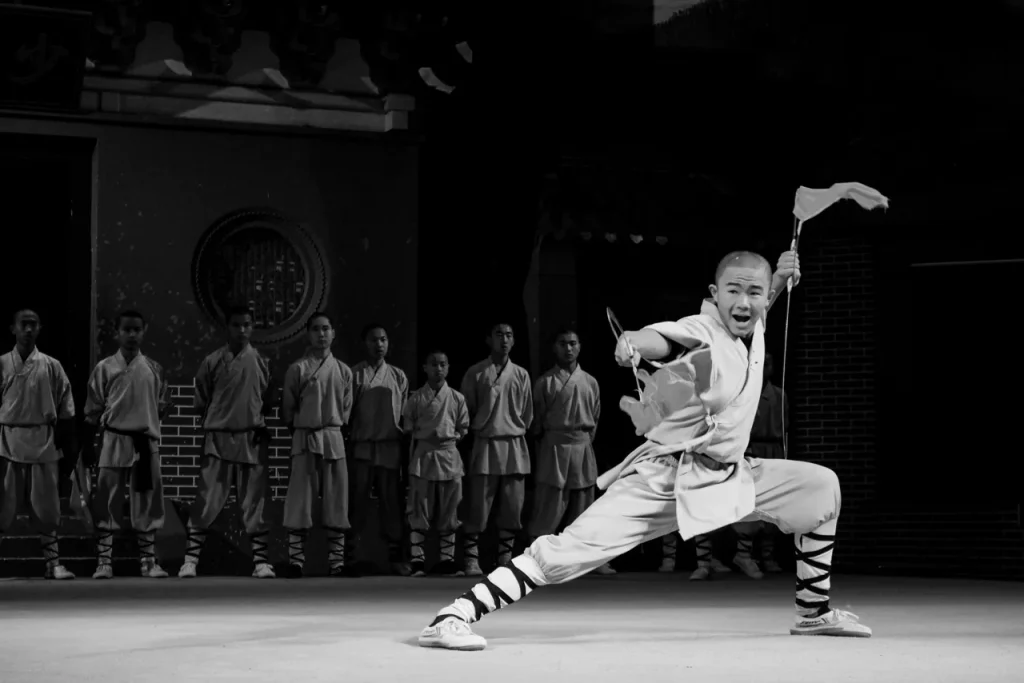
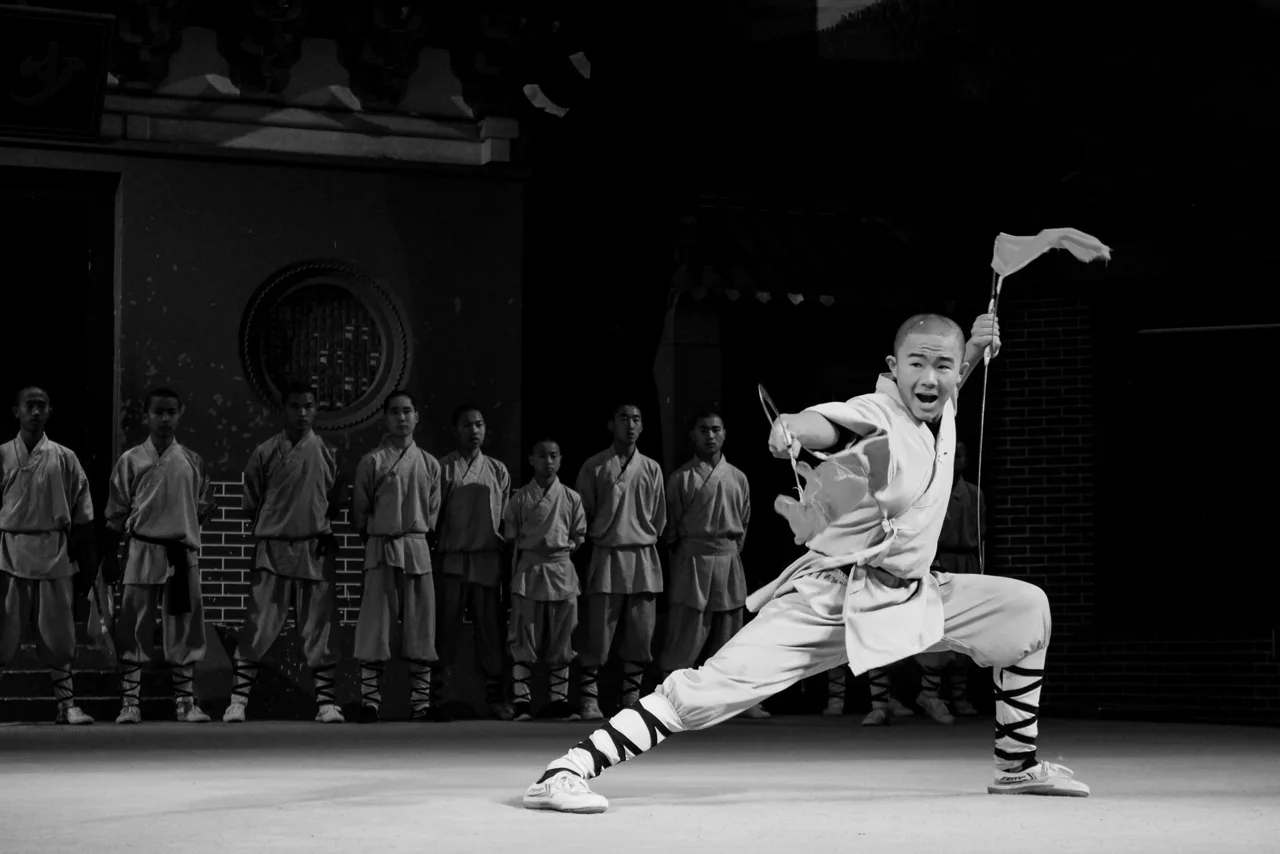
Shaolin Temple holds a special place in the kung fu imagination. It is a real place with a long history of Buddhist martial practice, but it has also become a cinematic symbol of discipline and mystery. In films, Shaolin monks train under extreme conditions, meditate in cold halls, and fight only when necessary.
The real Shaolin story is more complex, but the film version carries its own truth: that martial arts are not only about combat. They are about patience, repetition, and mind-body unity. That is why kung fu movies attract people who may never throw a punch. The training scenes feel like a spiritual practice.
The new generation: from Zhang Yimou to streaming
Directors like Zhang Yimou, Ang Lee, and Tsui Hantook wuxia into new visual territory. “Hero,” “Crouching Tiger, Hidden Dragon,” and “House of Flying Daggers” used color, landscape, music, and slow-motion to make fighting feel like painting. These films reached global audiences in a way earlier kung fu movies could not, partly because they treated martial arts as part of a larger artistic vision.
Today, younger audiences discover kung fu through streaming platforms, video games, TikTok clips, and documentaries. The form changes, but the fascination remains. A teenager who learns a kung fu move from a short video is continuing a tradition that began on misty mountaintops in black-and-white films.
This kind of slow discovery through movement and leisure fits the rhythm of city walks in China, where ordinary streets become places of exploration. Wuxia turns the world into a stage, and every walker becomes a potential traveler through an imagined past.
From screen to real life
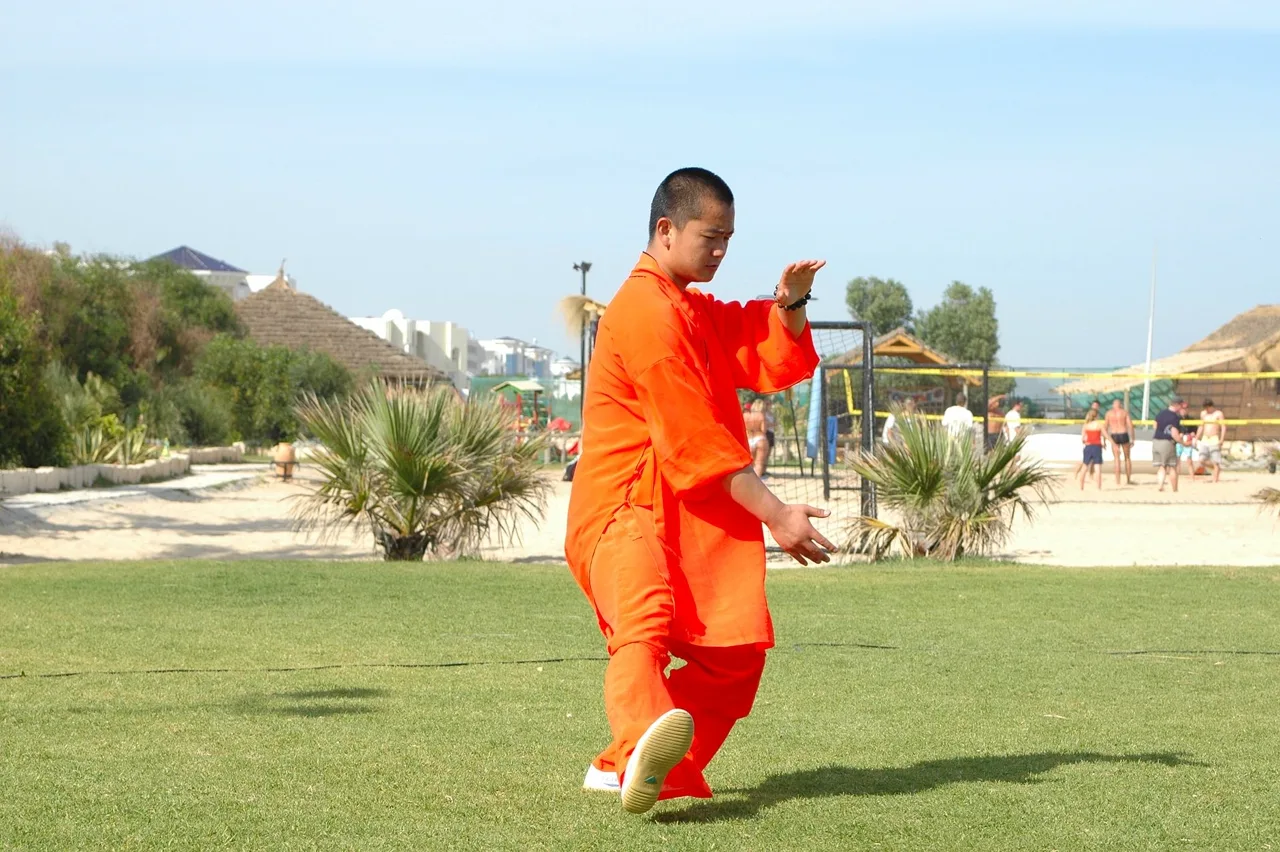
Kung fu movies have also influenced real-world behavior. Many people started martial arts training because of what they saw on screen. Schools teaching Wing Chun, Tai Chi, Shaolin forms, and modern wushu continue to attract students worldwide. The movies did not create these arts, but they made them visible and desirable.
The social side of Chinese culture also appears in shared practices like tea etiquette, where small gestures carry respect. In a kung fu school, bowing, standing in line, and waiting for the teacher’s signal carry similar meaning. The etiquette of the training hall is part of the art.
More than nostalgia
Some people assume kung fu movies belong to the past — a 1970s or 1990s phenomenon. But the genre keeps returning. New films, animated series, and cross-cultural collaborations show that the appeal has not faded. What changes is the style and platform. What stays is the image of a person who, through years of practice, can move like water and stand like stone.
Kung fu and wuxia will probably never disappear completely. They are too deeply connected to how China imagines heroism, discipline, and beauty. Every generation will find its own Bruce Lee, its own bamboo forest, and its own reason to watch one more fight scene.