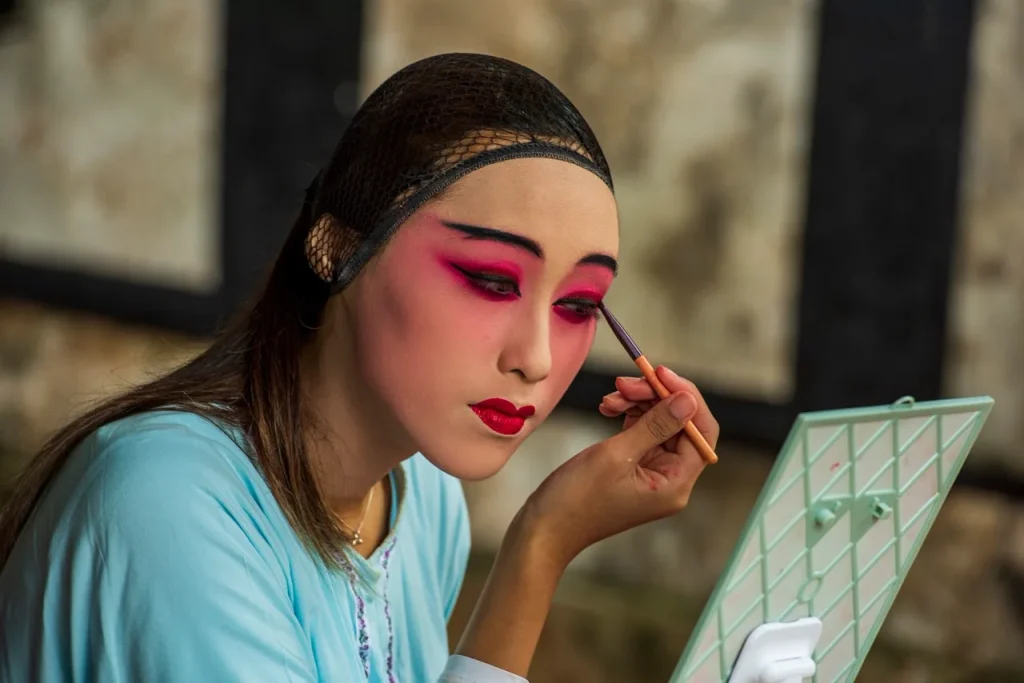
Chinese opera makeup is one of the most striking visual languages in Chinese culture. A painted face can tell the audience whether a character is brave, loyal, comic, suspicious, divine, or dangerous before the actor speaks a full line. For first-time viewers, the colors may look purely decorative. For regular opera fans, they are clues. The face is a map of personality.
This is especially famous in Jingju, often called Peking opera in English, but painted-face traditions also appear in other regional forms. The stage is not trying to imitate everyday life. It is built from stylized singing, movement, costume, rhythm, and gesture. Makeup belongs to that system. It makes emotion visible from the back row and turns character into design.
A stage language, not a mask for hiding
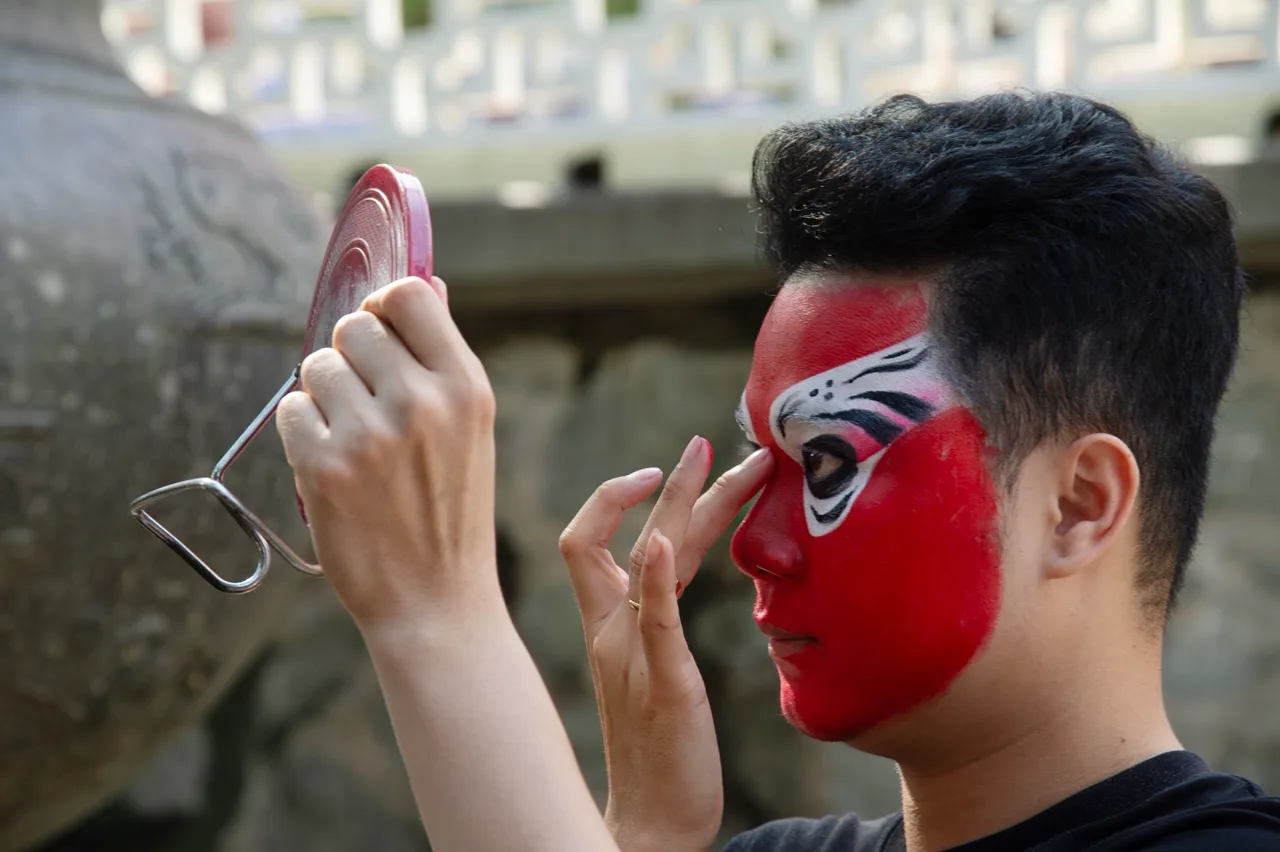
Opera makeup is sometimes compared with masks, but the comparison is only partly right. The actor’s face is painted, not hidden. The performer still uses eyes, mouth, posture, and breath to act. The makeup frames the performance and helps the audience read it quickly. In a theater where gestures are precise and symbolic, the painted face becomes part of the grammar.
The style also solves a practical problem. Traditional opera stages did not rely on close-up cameras. Audiences needed to recognize a general’s fierceness, a judge’s authority, or a trickster’s humor from a distance. Bold lines, strong colors, and symmetrical shapes made character legible. What looks exaggerated on a phone screen can feel perfectly balanced on stage.
What the colors suggest
Color meanings vary by tradition and role, but some broad associations are widely recognized. Red often suggests loyalty, courage, and uprightness. Black can signal integrity, rough strength, or stern justice. White may point to craftiness, suspicion, or treachery. Blue and green can suggest boldness, stubbornness, or wild energy. Gold and silver often belong to gods, spirits, and supernatural beings.
These meanings are not mechanical rules. A character is never only a color chip. The pattern, role type, story, singing style, and actor’s interpretation all matter. Still, colors give the audience an immediate starting point. They work much like the lucky color red in other settings, from festival decorations to the Fu character pasted on doors. Color carries memory before it carries explanation.
Patterns that reveal personality
The lines on the face are just as important as the colors. Thick eyebrows can make a character look forceful. Sharp white areas may make a face feel calculating. Animal-like or flame-like patterns can push a role toward the heroic, demonic, or supernatural. Some designs are associated with famous historical or legendary figures, so experienced viewers recognize the character almost immediately.
There is pleasure in that recognition. A child seeing opera for the first time may simply enjoy the spectacle. An older fan may notice whether a performer’s face follows a classic design or introduces a subtle variation. This mix of tradition and individual artistry is one reason opera remains a living art rather than a fixed museum exhibit.
Why young audiences are looking again
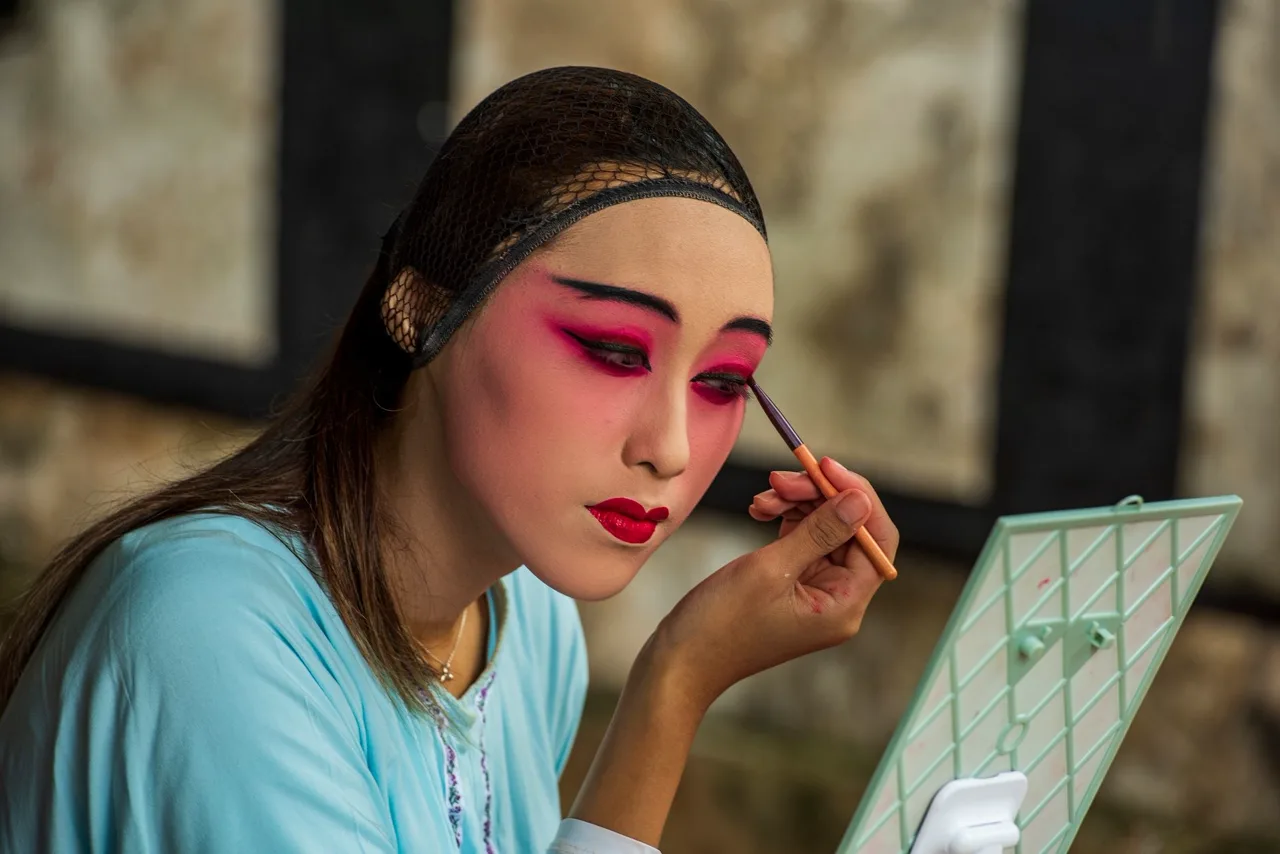
In recent years, opera makeup has become visible beyond the theater. Museums, short videos, school workshops, tourism festivals, and cultural markets often use painted-face imagery to introduce traditional performance. This fits a wider pattern: younger visitors are meeting heritage through more flexible spaces, much like the museum-going trend described in China’s summer museum nights.
The challenge is to keep the image connected to the art. A painted face on a souvenir is attractive, but opera makeup makes fullest sense with singing, percussion, costume, and story. The best cultural programs let people try a brushstroke, then explain the role behind it. They move from pattern to performance.
Makeup and moral storytelling
Traditional opera often dramatizes loyalty, betrayal, filial duty, justice, romance, ambition, and sacrifice. Makeup helps organize that moral world. It does not mean every good person looks one way and every bad person looks another. Chinese opera has plenty of complicated characters. But the face gives emotional direction. It tells the audience how to watch.
This is similar to other Chinese symbolic systems. The Double Happiness symbol does not explain an entire marriage, but it sets the emotional frame for a wedding. Opera makeup does something comparable on stage. It gives the story a visual key.
How to watch more carefully
If you attend a Chinese opera performance, spend a few minutes looking at faces before trying to understand every lyric. Ask what colors dominate. Notice whether the design is round, sharp, heavy, or delicate. Watch how the actor’s eyes move within the painted frame. See whether the face feels balanced with the costume and voice.
Most of all, do not treat the makeup as a costume-party effect. It is stage calligraphy written on the human face. It compresses history, role type, aesthetics, and emotion into a design that can be read across distance. That is why Chinese opera makeup continues to fascinate people: it turns a character’s inner life into color and line, then lets the actor bring that painted story to life.