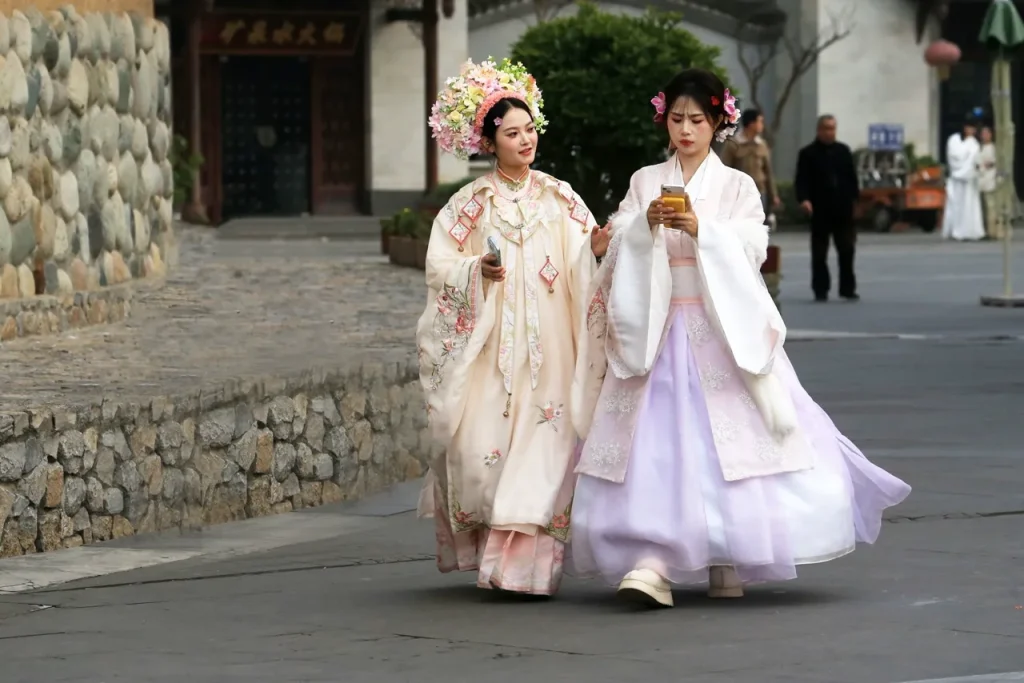
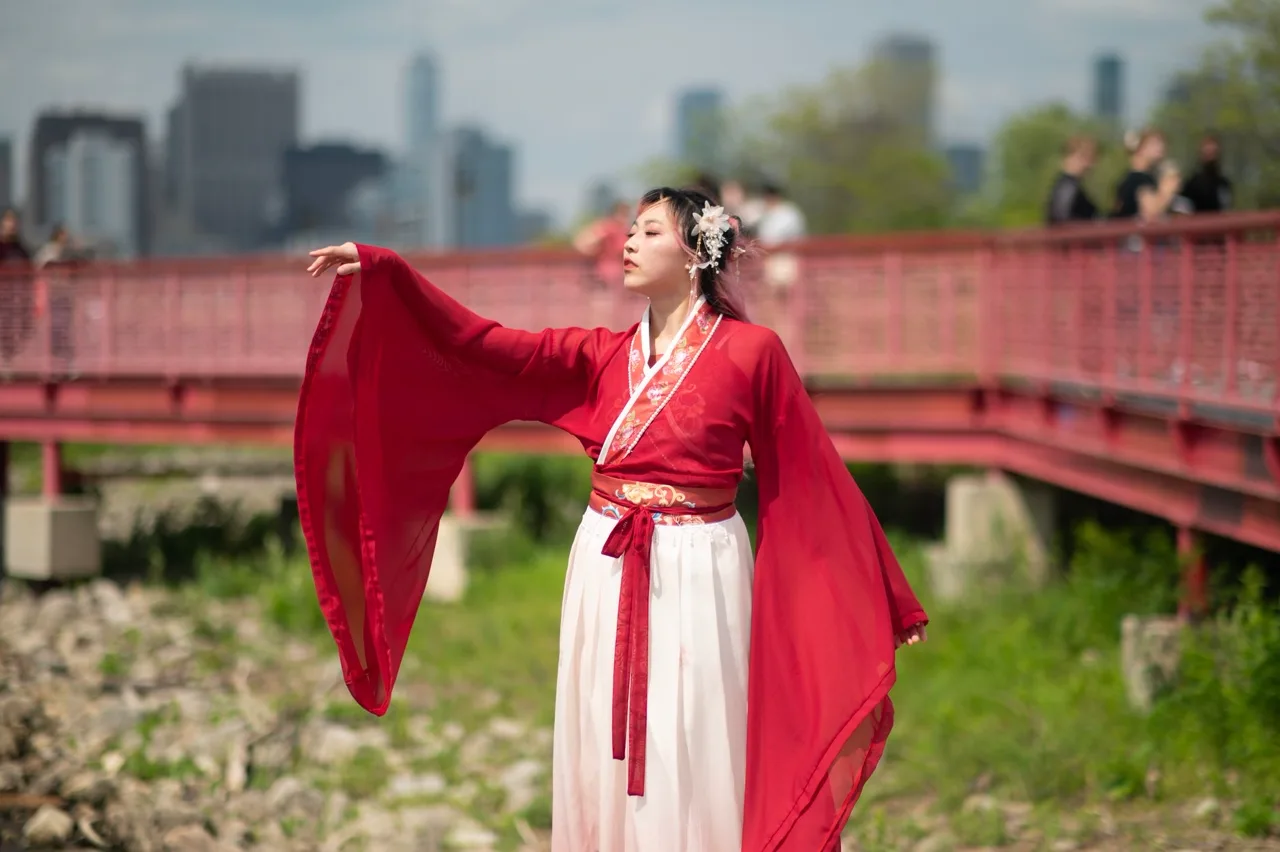
On a weekend afternoon in a Chinese city park, it is no longer unusual to see someone in flowing sleeves, layered robes, embroidered collars, or a hair ornament that looks borrowed from an old painting. The scene may include a friend holding a reflector, a phone balanced on a tripod, and a few curious grandparents watching from a bench. This is one everyday face of the hanfu revival.
Hanfu refers broadly to styles of clothing associated with the Han Chinese before the Qing dynasty. The word covers many historical shapes rather than one fixed uniform. For today’s wearers, hanfu can be formal, scholarly, romantic, playful, historically careful, or deliberately modern. What makes the revival interesting is not simply that old clothing returned, but that young people made it visible in ordinary public space.
From costume to weekend habit
For many people outside China, traditional clothing appears mainly in films, dramas, stage performances, or festival photographs. Hanfu culture changes that frame. A person may wear hanfu for a park walk, a graduation photo, a museum visit, a birthday shoot, or a seasonal flower-viewing trip. The clothing becomes part of daily leisure rather than a distant historical display.
This fits the broader rhythm of Chinese urban weekends. The same young people who plan coffee stops, museum nights, and slow neighborhood walks may also plan a hanfu outing. TodayChinese has described how city walks in China turn ordinary streets into small discoveries. Hanfu adds another layer: the walker becomes part of the scene.
Why the park matters
Parks are friendly stages for hanfu because they offer bridges, lakes, pavilions, old trees, and open light. They also let strangers encounter the clothing gently. A park is public, but not as rushed as a subway station. People can look, smile, ask questions, or keep walking.
That public visibility matters. Clothing is one of the quickest ways to make culture tangible. A person in hanfu does not need to give a lecture before the fabric starts a conversation. The sleeves, belt, hairstyle, and colors ask people to notice form, gesture, and history.
Not only nostalgia
The hanfu revival is often described as nostalgia, but that is only part of the story. Many wearers are not trying to escape modern life. They order bubble tea, take selfies, ride high-speed trains, and post short videos while wearing traditional silhouettes. Their interest is not pure reconstruction. It is a negotiation between historical imagination and contemporary identity.
That negotiation appears across modern Chinese culture. New tea shops remix old tea traditions for weekday routines, as seen in TodayChinese’s article on China’s new tea shops. Hanfu does something similar with clothing. It keeps a link to the past while accepting modern convenience, cameras, and personal style.
How people learn the details
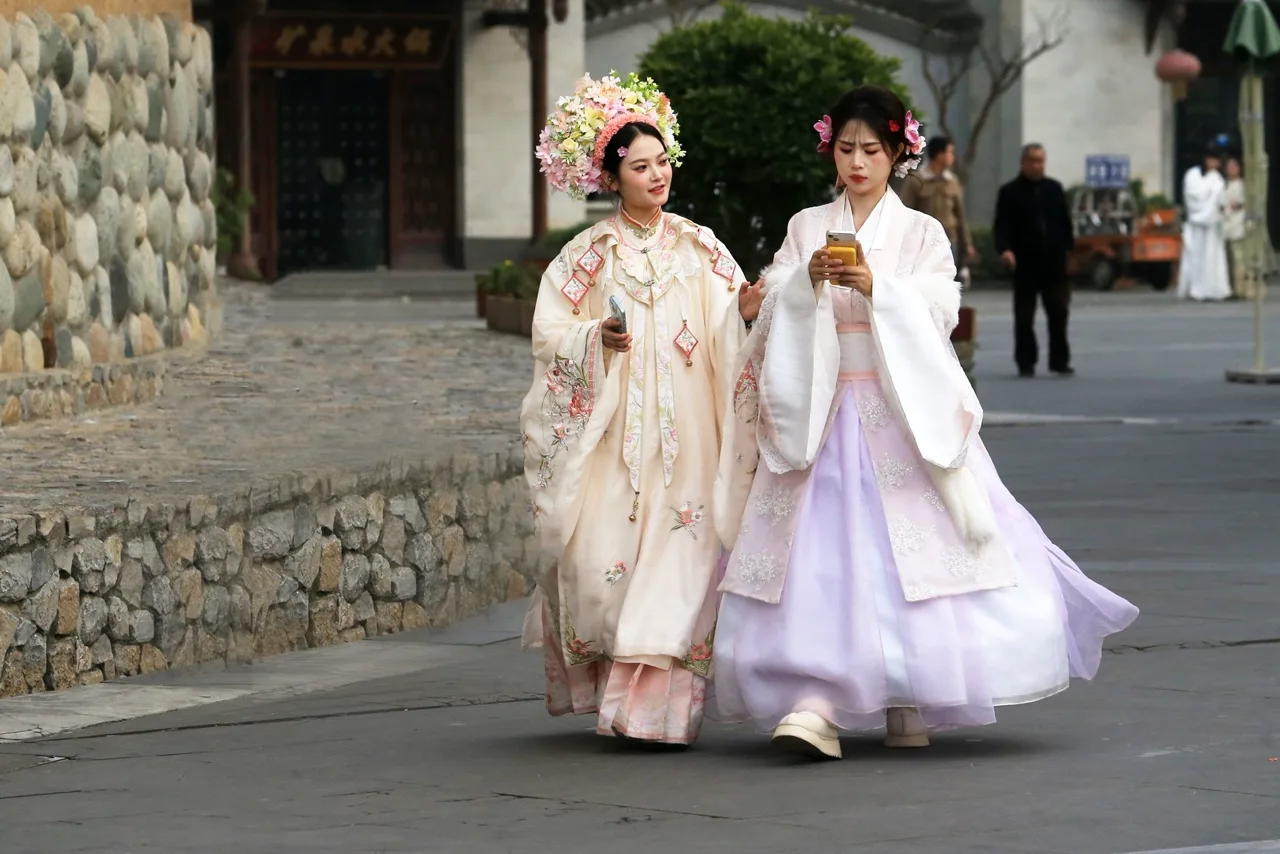
Beginners often start with an attractive set bought online. Later they may learn about dynastic differences, fabric choices, waist height, collars, sleeve shapes, hair accessories, and etiquette. Some communities care deeply about historical accuracy. Others care more about beauty and confidence. Both approaches can coexist, though debates can be lively.
Social media has made this learning easier. Tutorials explain how to tie sashes, match colors, or avoid common mistakes. Photographers share locations. Museums provide visual references. Historical dramas inspire curiosity, even when they are not fully accurate. The revival grows through images, but it also leads some people toward deeper reading.
Performance, confidence, and belonging
Wearing hanfu in public takes confidence. The first outing can feel exposed. Friends help by going together, choosing locations, and taking photographs. Over time, the clothing can create belonging. A small hanfu group in a park becomes both a fashion circle and a cultural community.
The visual side also connects hanfu with performance traditions. Chinese opera makeup, for example, uses color and pattern to reveal character, as TodayChinese explains in Chinese opera makeup. Hanfu is usually less theatrical, but it still teaches that appearance can carry history, mood, and role.
A living wardrobe
Hanfu’s future will probably remain mixed. Some versions will become more historically precise. Some will become simpler and more wearable. Some will be used mainly for photos. Some may enter weddings, festivals, classrooms, and cultural events. The important point is that the clothing is no longer locked away as an image of the past.
When hanfu appears in a park, it changes the mood of the afternoon. It makes people glance twice. It gives a young wearer a way to say that tradition is not only something to study, but something that can move through sunlight, conversation, and ordinary weekend air.