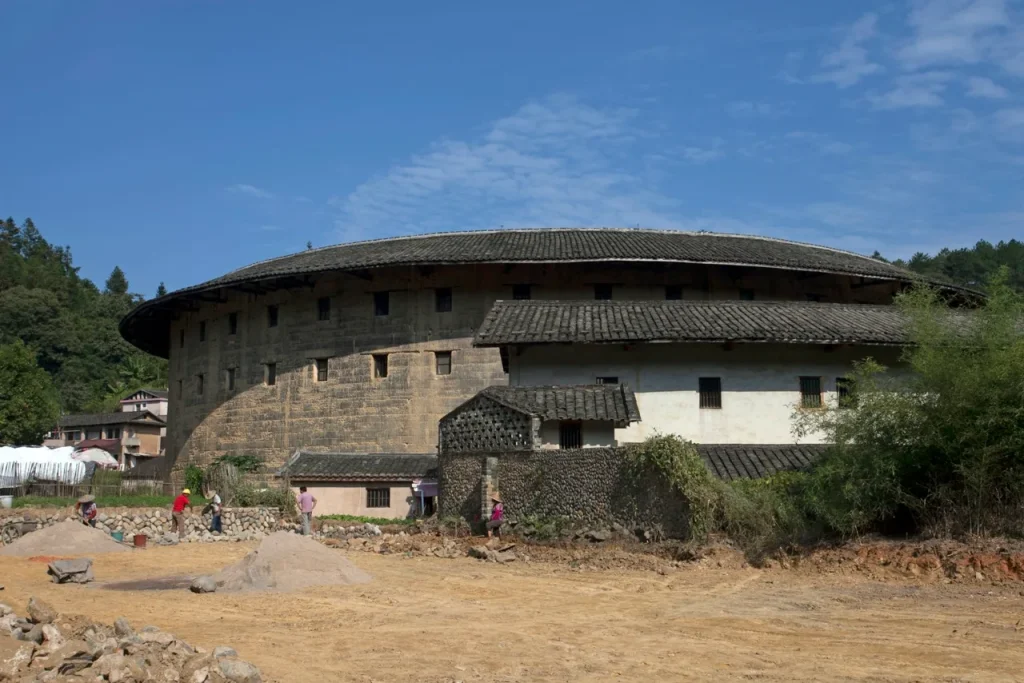
Fujian tulou are among the most memorable buildings in China. From the outside, a round tulou can look like a fortress: thick earthen walls, small upper windows, one main gate, and a powerful shape rising from green hills. Step inside, however, and the mood changes. A large open courtyard appears, ringed by wooden galleries, kitchens, storage rooms, stairways, ancestral spaces, and family rooms. The building is both defensive and domestic.
Most tulou are associated with Hakka and other communities in the mountainous areas of Fujian and neighboring regions. They were built to house extended families or clans, sometimes hundreds of people under one roof. Their form answers practical needs: security, cooperation, climate, land use, and social organization. They are not simply strange-looking tourist attractions. They are architecture shaped by shared life.
Earth as engineering
The word tulou means earthen building. The walls were made with rammed earth, often mixed with local materials such as sand, lime, clay, and sometimes sticky rice or other binders depending on place and period. Builders compressed the material layer by layer, creating walls that could be remarkably strong. Stone foundations helped protect against moisture, while timber structures supported the interior floors.
The result was practical and durable. Thick walls kept interiors cooler in summer and warmer in winter. Small exterior windows improved defense. The single main entrance could be controlled. In a region where communities needed protection from bandits, conflict, and uncertainty, the building itself became a shield.
A village inside one building
The most moving thing about a tulou is not its wall, but its social design. Rooms are arranged around a shared courtyard. Families may occupy vertical units, with storage or kitchens below and living spaces above. The courtyard is where people meet, work, celebrate, dry food, watch children, and hold rituals. The building creates privacy and community at the same time.
Imagine the sound of daily life inside: cooking, footsteps on wooden corridors, elders talking in the courtyard, children calling from one level to another, festival preparations, rain hitting roof tiles. A tulou is not only an object to photograph. It is an acoustic and social world.
Round, square, and many variations
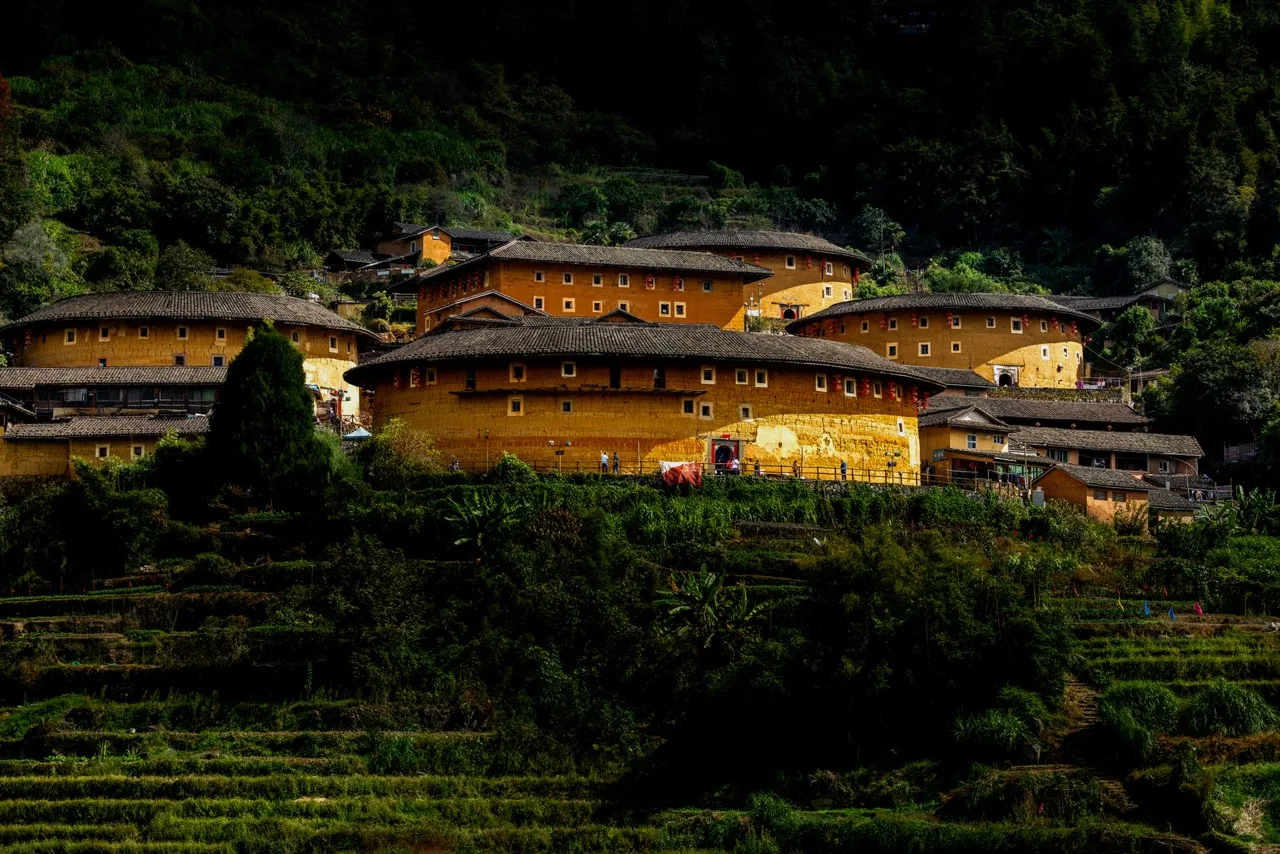
Although round tulou are famous, not all tulou are round. Some are square, oval, rectangular, or arranged in clusters. Each form reflects local terrain, family size, resources, and historical moment. A cluster of tulou can feel like a small settlement, with paths, fields, streams, and ancestral halls linking the buildings to the surrounding landscape.
This variety matters because heritage is often simplified for tourism. The postcard image of one perfect roundhouse is beautiful, but the real tradition is broader. It includes construction knowledge, clan organization, farming life, migration history, and the adaptation of architecture to mountain environments.
Defense and trust
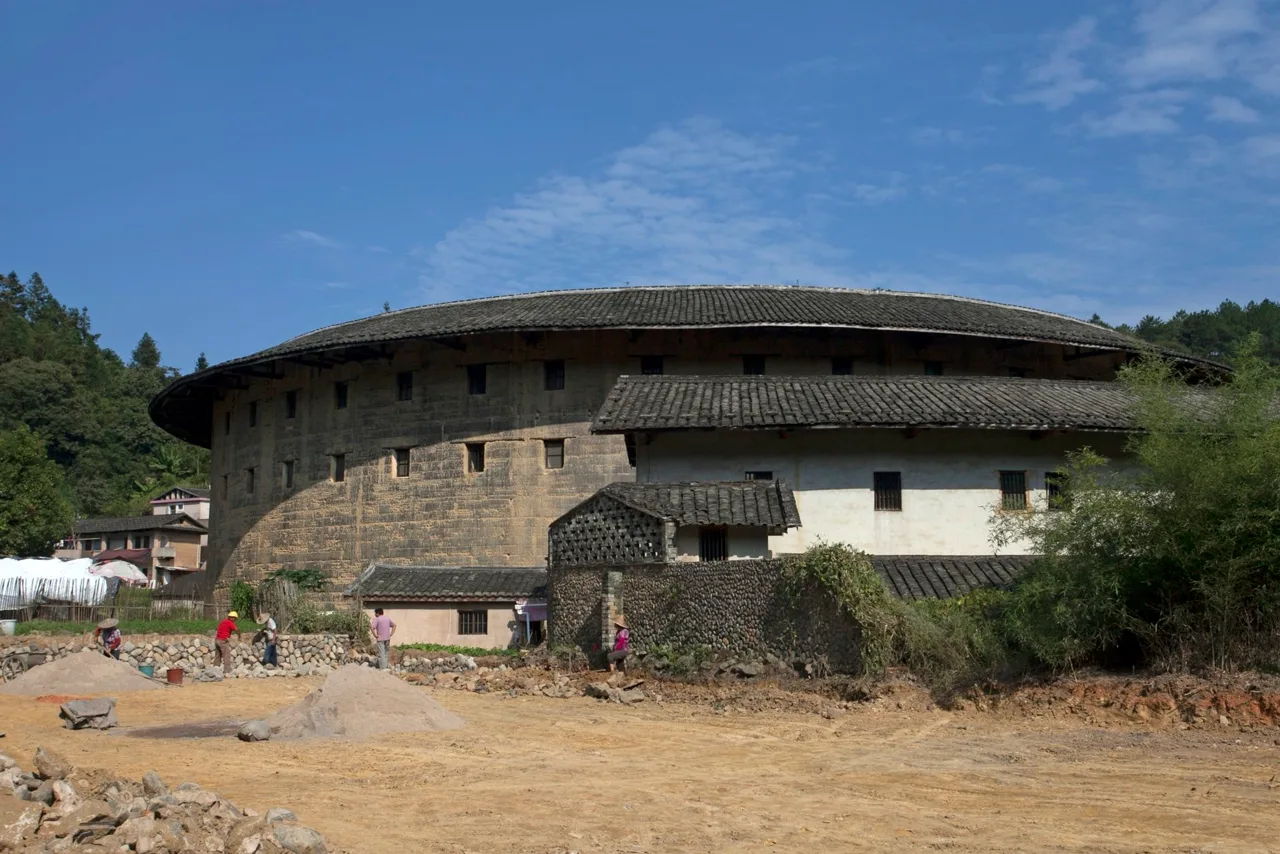
Tulou architecture expresses a tension: defense against outsiders and trust among insiders. Thick walls protect the group, but the open courtyard requires cooperation. Families share wells, corridors, rituals, repairs, and rules. Living so close together can create warmth, but also demands patience. Architecture alone cannot make harmony; it can only create the conditions for it.
This is why tulou are such powerful heritage sites. They show that Chinese history was not built only in capitals, palaces, or canals. It was also built in rural communities that developed their own solutions to safety and belonging. Like the Grand Canal, tulou remind us that infrastructure can shape culture for centuries.
Tourism and living heritage
Many tulou are now tourist destinations, and some are recognized internationally for their heritage value. Visitors come for the dramatic shapes and mountain scenery. Tourism can bring income, encourage preservation, and help younger generations value local culture. But it can also create pressure: souvenir stalls, staged performances, crowding, and changes to daily life.
The best visits respect the fact that some tulou are still connected to residents and descendants. A courtyard may be scenic to a traveler, but it is also someone’s home or family memory. Responsible tourism means asking before photographing people, keeping noise low, and supporting preservation without treating living communities as museum props. Museum-style interpretation, like the trend described in China’s growing museum culture, can help visitors understand context rather than only chase photos.
How to appreciate tulou
When visiting or studying tulou, look beyond the shape. Notice the thickness of the walls, the position of the gate, the relationship between courtyard and rooms, the materials under your hand, and the surrounding fields. Ask how water was stored, how food was prepared, where rituals happened, and how families organized space. These questions turn a beautiful building into a human story. For a modern way to notice these layers in urban settings, TodayChinese’s piece on city walks in China offers a useful companion.
Tulou endure because they answer a universal problem in a distinctive way: how can people live together safely, practically, and meaningfully? Their earthen walls speak of defense, but their courtyards speak of shared life. That combination makes them one of China’s most extraordinary forms of architectural heritage.