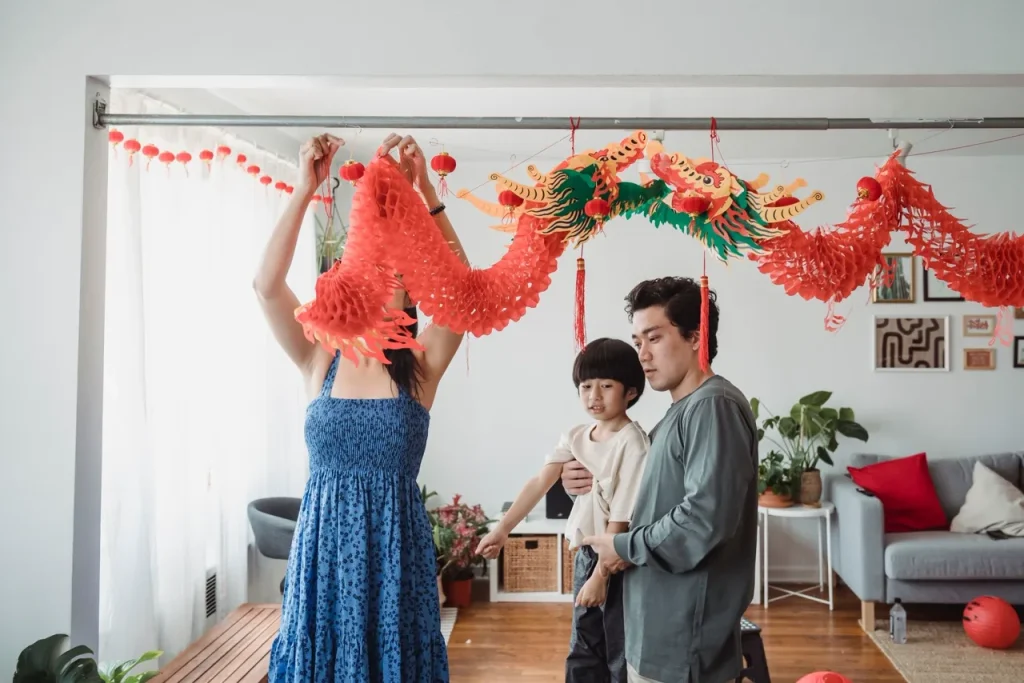
Chinese paper cutting, or jianzhi, begins with a fragile material and ends with a powerful feeling. A sheet of red paper becomes flowers, animals, children, fish, peaches, zodiac creatures, or lucky characters. The finished piece may be pasted on a window, door, wall, or wedding room. Light passes through the cut spaces, and the design turns a home into a place of celebration.
The art is closely associated with festivals and family occasions, especially Chinese New Year and weddings. It can be highly skilled folk art, casual household decoration, school craft, or museum-worthy design. Its appeal comes from a simple miracle: scissors remove paper, and meaning appears.
Why red paper matters
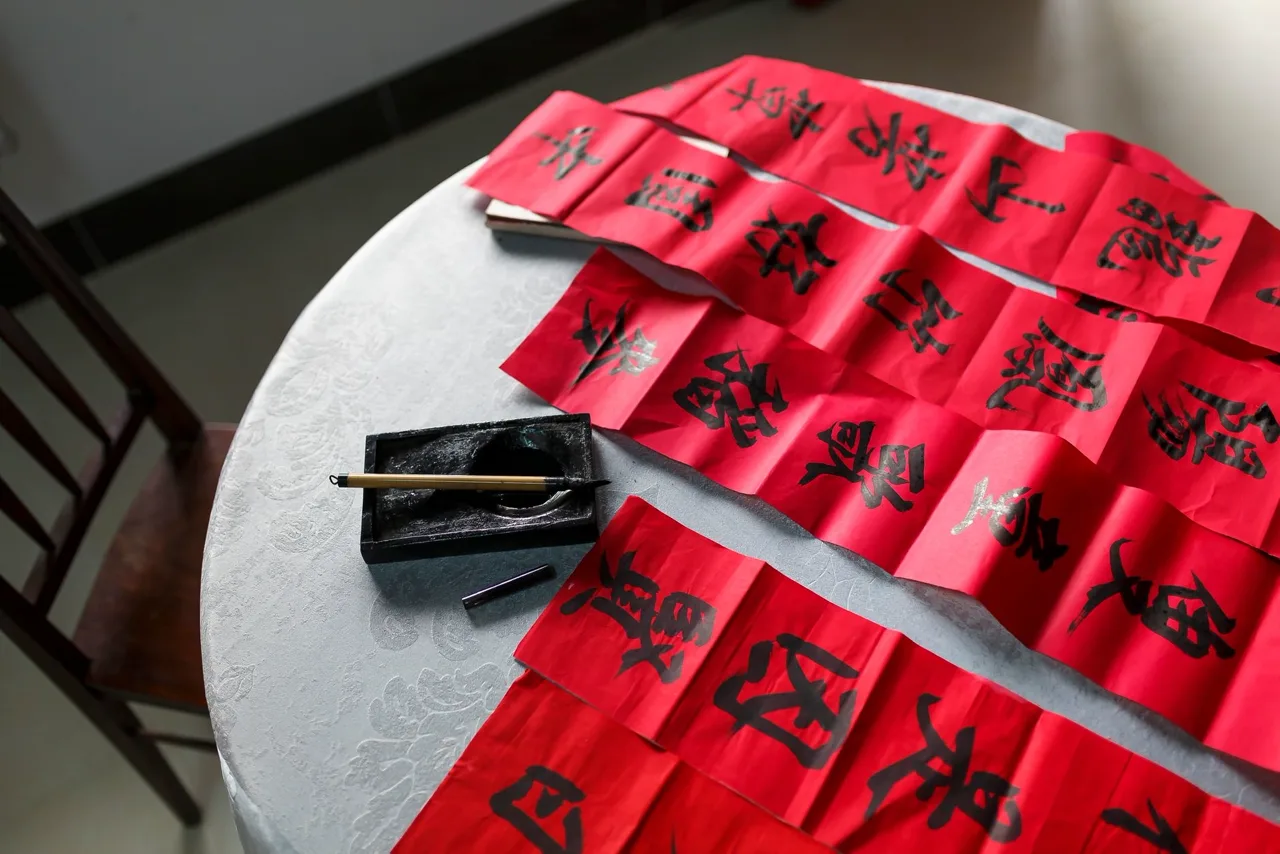
Red is the color most people associate with Chinese paper cutting because it suggests luck, joy, protection, and celebration. A red paper cut on a window can make even an ordinary room feel ready for a festival. In winter, when many northern villages once had pale skies and bare trees, red window flowers brought warmth into the home.
The color connects paper cutting with other auspicious objects, such as the Fu character on doors. Both use visible symbols to invite blessing. Both turn the home into a message.
Symmetry and patience
Many paper cuts use folding to create symmetry. A maker folds the paper, cuts carefully, then opens it to reveal a balanced pattern. The unfolding moment is part of the pleasure. What looked like a small folded shape becomes a complete design.
More complex works require years of practice. Artists control thin lines, repeated patterns, negative space, and tiny details without tearing the paper. A good paper cut feels lively, not stiff. Animals seem ready to move. Flowers seem to open. Characters feel festive rather than merely printed.
Common images and their wishes
Paper cutting is full of symbolic images. Fish may suggest abundance because the word for fish sounds like surplus. Peonies suggest wealth and beauty. Bats can symbolize good fortune because of sound associations. Peaches suggest longevity. Children may represent family continuity. Roosters, rabbits, dragons, and other animals connect designs to the zodiac year.
These symbols work best when people recognize them. A paper cut is not only private art; it is social decoration. Relatives, neighbors, and guests can read the wishes at a glance. In this sense, paper cutting belongs to the same symbolic world as the Double Happiness wedding symbol, where design communicates joy before anyone explains it.
Windows as a stage
Window paper cuts are sometimes called window flowers. The name is lovely because the paper becomes part of the architecture. A window is not just glass; it becomes a stage for shadow, color, and seasonal mood. During festivals, a row of red designs can make a street feel connected household by household.
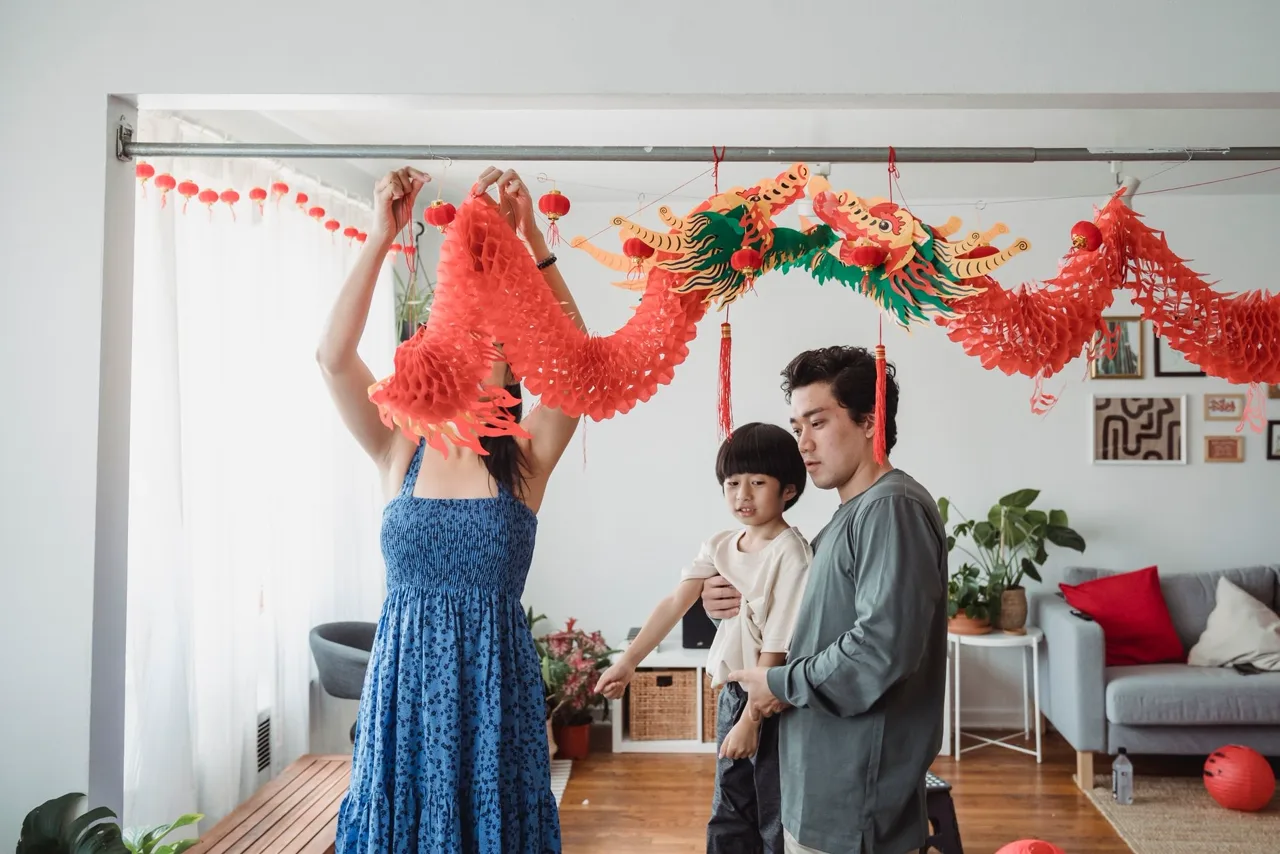
This matters because many Chinese traditions are domestic before they are public. A festival is prepared at home through cleaning, cooking, decorating, and visiting. Paper cutting gives those preparations a visible face.
From village craft to modern design
Paper cutting has moved into classrooms, cultural centers, tourism markets, fashion graphics, packaging, and digital illustration. Some designs remain handmade; others imitate the style through printing or laser cutting. Purists may prefer scissors and hand skill, but modern adaptations also help keep the visual language familiar.
The challenge is to preserve the warmth of the craft. A handmade paper cut carries small irregularities. Those irregularities show the maker’s hand. They remind us that tradition is not only a pattern; it is a person sitting at a table, folding paper and imagining a wish.
A decoration that says welcome
If you see paper cutting during Spring Festival, do not treat it as background decoration. Look at the image. Ask what wish it carries. Is there a fish for surplus, a child for family, a flower for beauty, a character for blessing, or an animal for the year?
Chinese paper cutting survives because it is affordable, beautiful, and emotionally direct. It does not need expensive materials to transform a space. A red sheet, a sharp blade, and patient hands are enough to place a wish on the window.