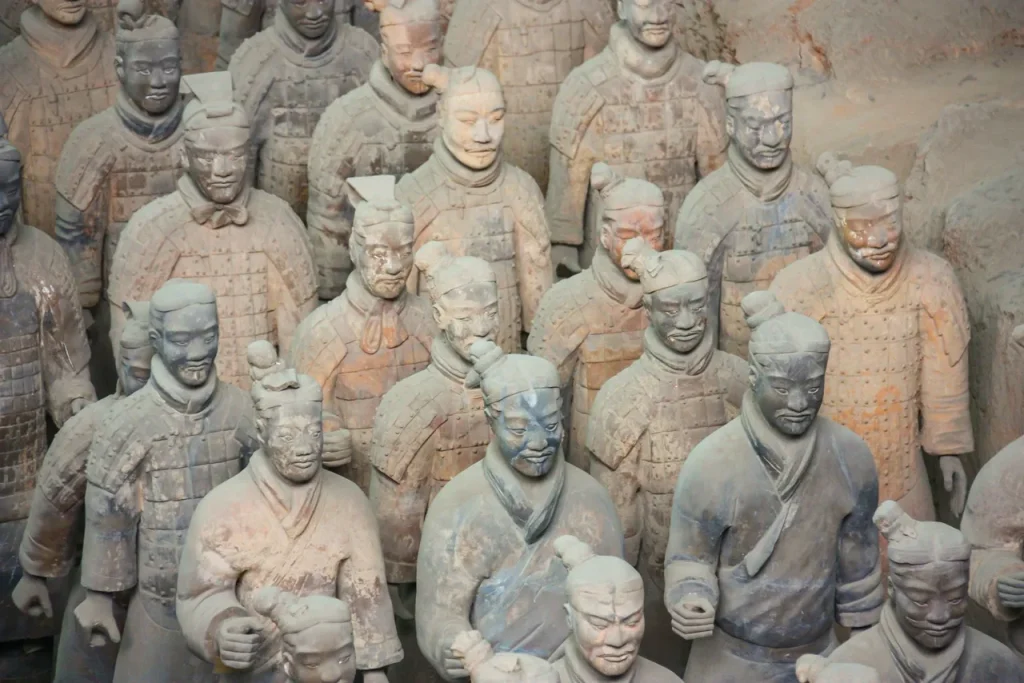
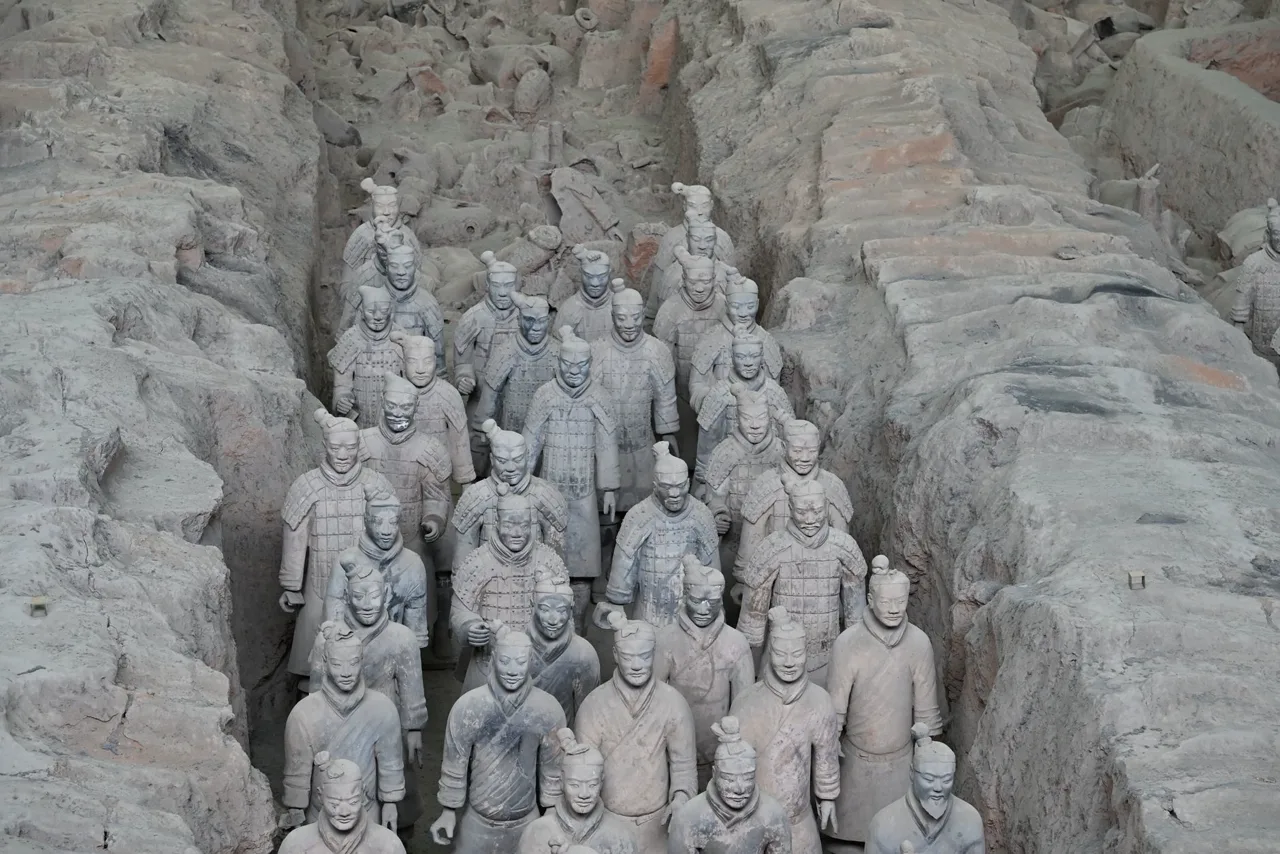
The Terracotta Warriors are among the most recognizable archaeological discoveries in China: rows of life-sized clay soldiers standing near the tomb of Qin Shi Huang, the First Emperor. Their faces are calm, their bodies armored, and their formation suggests an army still waiting for orders. For visitors, the sight is overwhelming because it combines scale with detail. There are thousands of figures, yet many seem individual.
The clay army was built to accompany and protect the emperor after death. It reveals a world in which political power, military organization, craftsmanship, and beliefs about the afterlife were tied together. The tomb complex was not just a burial place. It was an underground expression of empire.
An emperor who wanted order to continue
Qin Shi Huang unified China in 221 BCE after long warfare among rival states. His rule standardized writing, weights, measures, currency, roads, and administration, but it was also harsh and highly centralized. The Terracotta Warriors reflect that desire for order. Even in death, the emperor was surrounded by ranks, roles, horses, chariots, and command structures.
This makes the site different from a simple treasure tomb. The army is a political statement. It says that imperial authority should continue beyond the visible world. The emperor’s power needed protection not only in life, but in the next realm.
Mass production with human detail
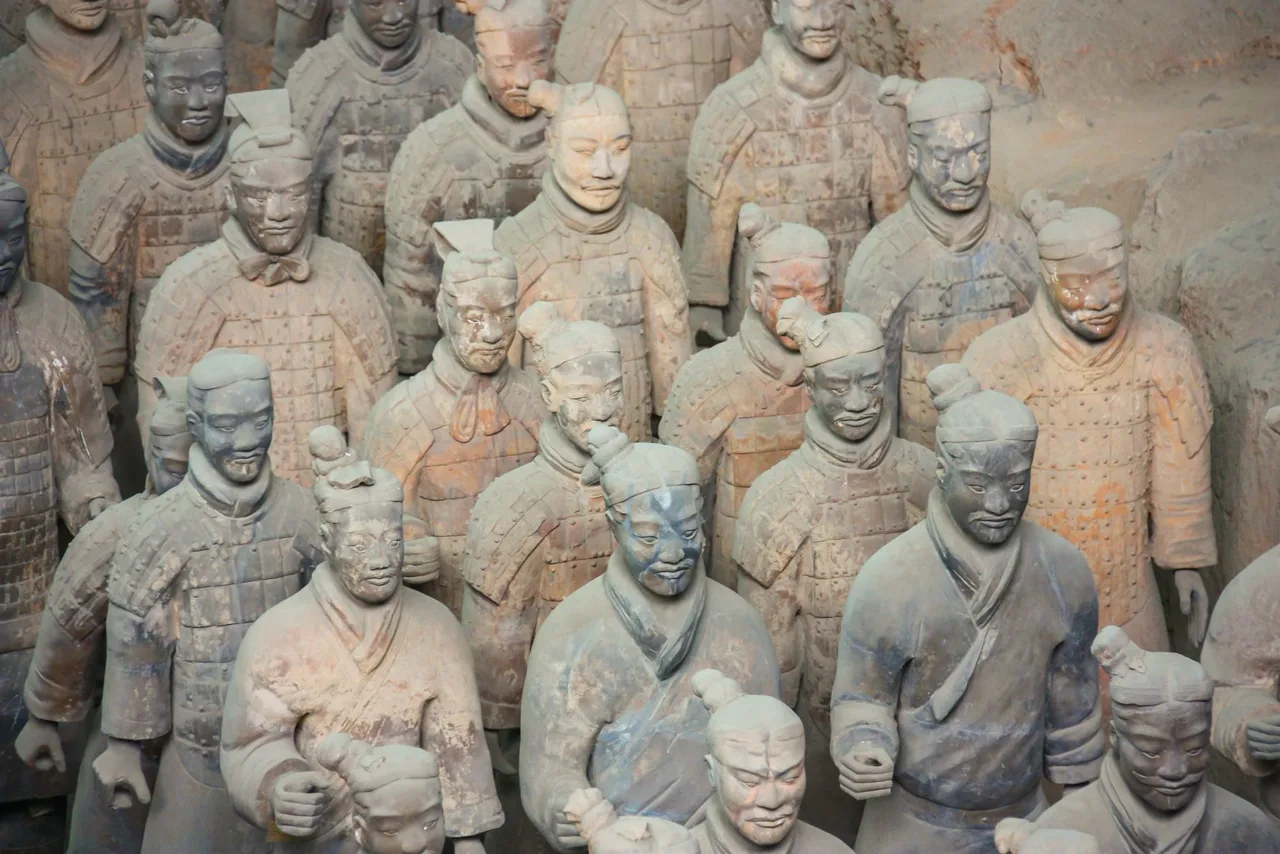
One of the most fascinating features of the warriors is the balance between standardization and variation. Bodies, limbs, and armor could be produced through organized workshop methods, but faces, hairstyles, ranks, and details vary. Some soldiers look young, some older. Some appear stern; others seem almost ordinary. This mix of system and individuality makes the army feel strangely alive.
The craftsmanship also reminds us that famous heritage sites are built by workers, artisans, planners, and laborers whose names are often lost. Like the builders of Fujian tulou or traditional courtyard homes, they translated social order into physical form. Architecture and sculpture both show how people imagine community, defense, and authority.
Color that disappeared
Today the warriors usually look gray or earthy, but many were originally painted in vivid colors. Exposure after excavation caused much of the paint to flake away. This surprises many visitors because the modern image of the army is monochrome. In its original state, the underground formation would have looked far more colorful and lifelike.
That lost color is a useful reminder. Archaeology never gives us the past exactly as it was. It gives fragments, materials, traces, and questions. Scholars preserve what they can, interpret carefully, and leave room for what has disappeared.
Why the site still captures imagination
The Terracotta Warriors attract global attention because they are both monumental and personal. A huge army impresses the mind; individual faces catch the eye. Visitors may come for the scale but remember one soldier’s expression. The site turns ancient power into a human encounter.
This is also why Chinese heritage remains powerful in modern culture. A canal, a script, a roundhouse, or a clay soldier can connect present-day visitors with systems much larger than one object. TodayChinese’s article on the Grand Canal shows how infrastructure carries memory; the Terracotta Warriors show how burial art carries political imagination.
Connected to writing and administration
The Qin empire’s standardization of script is another reason the warriors belong in a larger story of Chinese civilization. Writing had already developed long before Qin, as seen in early forms such as oracle bone script. Qin rule pushed written administration into a new imperial framework. Armies, roads, laws, and records depended on shared systems.
The clay army therefore represents more than military strength. It belongs to an age when empire tried to make people, objects, and information fit a unified order.
How to look at the warriors
When looking at the Terracotta Warriors, notice formation first, then detail. See how rows create authority. Then look at hands, shoes, hair, armor, and faces. Ask how many workshops, tools, kilns, and workers were required. Ask what kind of ruler imagined needing this army below ground.
The warriors endure because they are not only beautiful artifacts. They are clay questions about power, fear, ambition, labor, and memory. More than two thousand years later, they still stand in formation, asking visitors what kind of world could have made them.