Chu Xi: Chinese New Year’s Eve and the Heart of Family Reunion
What Is Chu Xi?
Chu Xi (除夕), usually translated as Chinese New Year’s Eve, is the last night of the traditional Chinese lunar year. It is one of the most emotionally important moments in Chinese culture. If Spring Festival is the whole season of celebration, Chu Xi is its warm center: the night when family members try to come home, share the reunion dinner, honor ancestors, stay awake for the new year, and welcome good fortune.
The two characters in Chu Xi are meaningful. Chu means “to remove” or “to get rid of.” Xi refers to the evening, and in folk explanation it is also connected with the old year being driven away. Together, Chu Xi suggests removing the old night before the new year arrives. It is a threshold moment — not yet the first day, but no longer an ordinary day.
For many Chinese people, Chu Xi is less about public spectacle and more about family. Even people who do not practice every custom may still feel that the reunion dinner matters. It is a night of food, memory, obligation, gratitude, and hope.
Traditional Origins and Folk Legends
Chu Xi is closely linked to the wider origin stories of Chinese New Year. The most famous legend tells of Nian, a frightening beast that came out at the end of the year to harm villagers. People discovered that Nian feared loud sounds, fire, and the color red. To scare it away, they set off firecrackers, hung red decorations, lit lamps, and stayed together through the night.
Although this story is a legend rather than a historical record, it explains many familiar customs: red couplets on doors, firecrackers, lanterns, noise, and the idea of guarding the household from misfortune. The holiday also has deeper roots in ancient year-end rituals. Families made offerings to ancestors and gods, cleaned the home, settled accounts, prepared food, and symbolically renewed the household.
In an agricultural society, the end of the year came after harvest and before the next farming cycle. People thanked the past year, prayed for the next, and reinforced family bonds. Chu Xi became the night when the household gathered its scattered members and restored order before stepping into a new beginning.
How Ordinary People Celebrate
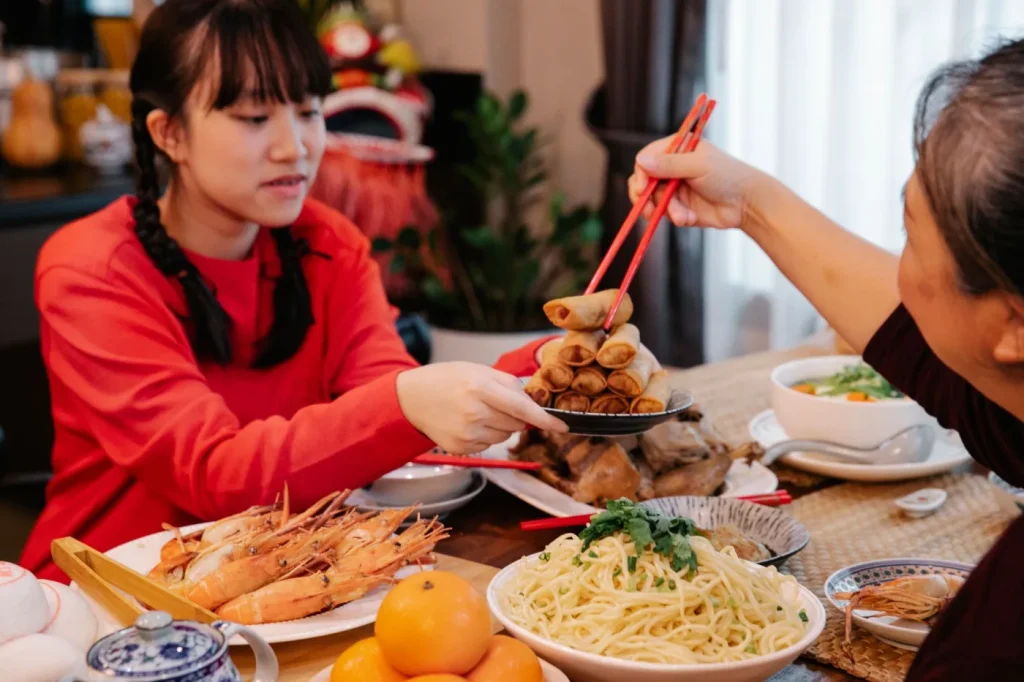
The most important custom is the reunion dinner, called nian ye fan (年夜饭). Family members try to return home, sometimes traveling across provinces in the world’s largest annual human migration, the Spring Festival travel rush. The meal is usually generous, with dishes chosen not only for taste but also for lucky meanings.
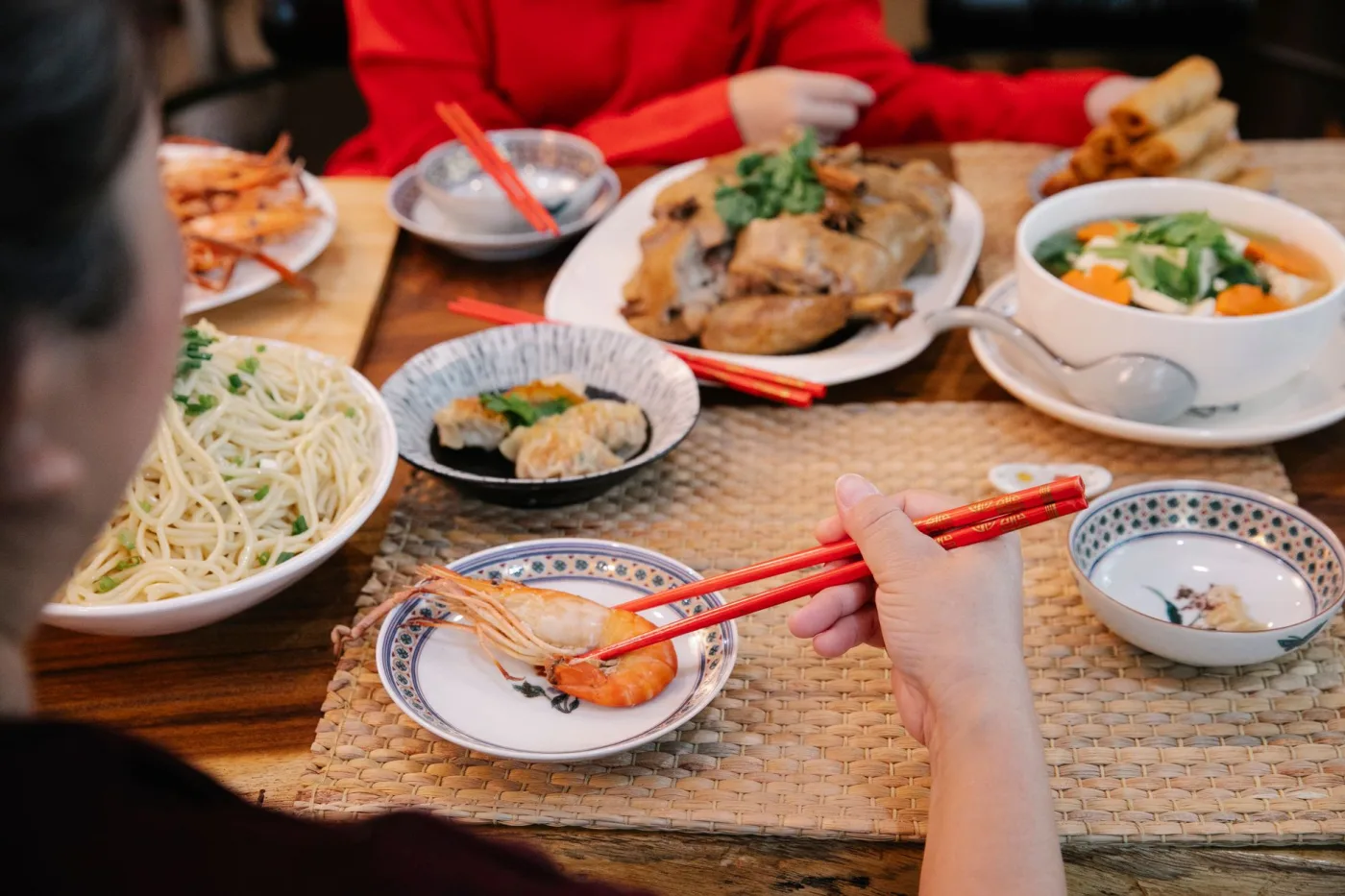
Before dinner, families may paste Spring Festival couplets on the door, hang red paper decorations, clean the house, and prepare offerings for ancestors. In some homes, elders set out bowls, chopsticks, fruit, wine, incense, or special dishes to invite ancestors to share the family’s gratitude and blessings.
After dinner, many families watch the CCTV Spring Festival Gala, a television variety show that has become a national tradition since the 1980s. Others play cards, chat, make dumplings, send digital red envelopes, or video call relatives who cannot return home. At midnight, people greet the new year. In places where fireworks are allowed, firecrackers or fireworks may mark the change of year.
Another old custom is shou sui (守岁), staying awake late or all night. Traditionally it expressed the wish to guard the year and bring longevity to parents. Today many people still stay up, though sometimes because they are watching shows, scrolling on their phones, or waiting for the midnight countdown.
How Chu Xi Was Observed in History
In imperial China, Chu Xi was a household ritual day. Families prepared for days in advance. They swept dust, repaid debts where possible, bought new clothes, made preserved foods, and prepared sacrificial offerings. Doors and walls were decorated with red paper, images of door gods, and auspicious characters.
The reunion meal varied by region and social class. Wealthy families might present elaborate banquets, while poorer families prepared the best they could. What mattered was not luxury alone but completeness: family together, food on the table, lamps lit, and the old year respectfully closed.
Court society had its own ceremonies, but ordinary household customs created the emotional life of Chu Xi. The old world emphasized hierarchy: younger people bowed to elders, ancestors were honored, and family order was reaffirmed. The holiday carried moral meaning as well as joy.
Modern Chu Xi
Modern life has changed Chu Xi but has not weakened its central emotional role. High-speed trains, airplanes, cars, and online ticketing have changed the journey home, while smartphones have changed greetings. Digital red envelopes on WeChat can fly across the country in seconds. Families separated by work or study can eat “together” by video call.
Urban apartments may not allow firecrackers. Some younger people prefer restaurant reunion dinners rather than cooking for two days. Migrant workers, overseas students, and mixed-nationality families may adapt the customs in practical ways. Some people cannot return home because of work, distance, cost, or public service duties.
Even so, the basic question remains the same: who can gather at the table? Chu Xi is still the night when many Chinese people feel most strongly the pull of home.
Historical and Modern Differences
Historically, Chu Xi was more ritualized and locally varied. People followed household rules passed down through generations, and religious or ancestral rites were more visible. Today, the holiday is more media-driven, mobile, and flexible. The Spring Festival Gala, online shopping, instant messaging, and digital payments have become part of the experience.
Another difference is food preparation. In the past, families made nearly everything by hand. Today, many dishes may be ordered from restaurants, bought as semi-prepared meals, or delivered. The labor burden, traditionally carried heavily by women, is slowly changing in some families, though not everywhere.
The meaning of reunion has also expanded. In older times, reunion usually meant returning to the ancestral household. Today it may mean a nuclear family meal in a city apartment, a video call across time zones, or a gathering at a restaurant.
Common Foods and Customs
Typical Chu Xi foods include:
• **Fish:** Yu sounds like “surplus,” so fish expresses the wish for abundance year after year.
• **Dumplings:** Especially in northern China, dumplings symbolize wealth and family participation.
• **Rice cakes:** Nian gao sounds like “higher year,” suggesting progress.
• **Chicken:** Often served whole to represent completeness.
• **Spring rolls:** Their golden color suggests wealth in some regions.
• **Tangyuan:** In parts of southern China, sweet rice balls symbolize family unity.
Common customs include cleaning the house before the day, decorating with red couplets, worshiping ancestors, eating reunion dinner, giving red envelopes, staying up late, and welcoming the first moments of the new year.
A Note for Foreign Readers
Chu Xi is best understood not as a party night but as a family night. The dinner table is the symbol. Many conversations may look ordinary — parents asking about work, grandparents urging people to eat more, children waiting for red envelopes — but underneath is a deep cultural message: the family has survived another year and enters the next one together.
If you are invited to a Chu Xi dinner, bring a respectful gift, arrive on time, praise the food, and follow the host’s lead. Avoid negative topics if possible. The night is about warmth, gratitude, and auspicious words. Even a simple greeting such as “Xin nian kuai le” or “Happy New Year” will be appreciated.